Artbreak! Studios and gallery forced to relocate after 30 years
Cubitt, in former stables, is run as a co-operative by the artists themselves
Friday, 23rd January — By Daisy Clague
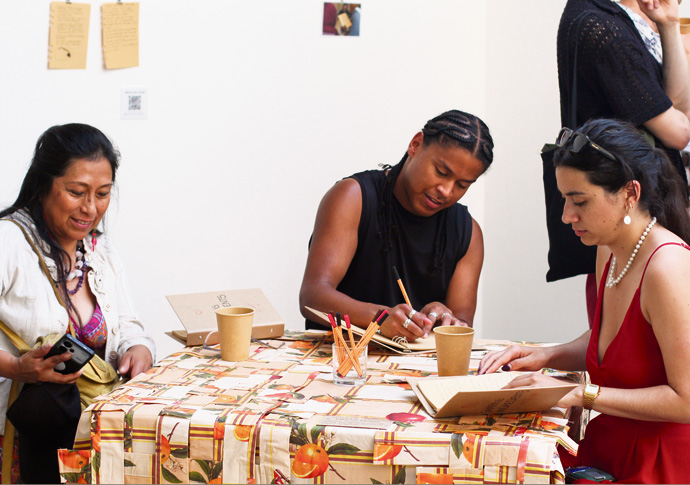
Cubitt is firmly rooted in the borough’s communities [Cubitt Artists Community and Civic Programmes
ONE of the last remaining artist-run gallery and studios in central London is being forced to relocate following the landlord’s decision to terminate its lease after 30 years.
Situated in a former stables behind Pentonville Road near the Angel, Cubitt is an airy maze of artists’ studios, a non-profit gallery space and a community radio room, all run as a co-operative by the artists themselves.
But it is now set to lose the home it has had since 1994, after its landlords said the gallery must vacate the space by April.
“It felt like the different stages of grief,” said programme director Seán Elder of the mood at Cubitt when they learned they would have to leave.
“At first it was sadness. It really felt like a period of mourning – for Cubitt, but also for a London that maybe doesn’t exist any more, or isn’t going to exist soon if more spaces like this disappear.
“But that eventually gave way to determination – a recognition of what we’ve built over the past 25 years and the importance of continuing that.”
Cubitt’s team went public with the news at the start of January, and asked their supporters to help with the challenge of finding a suitable long-term home, as well as a “meanwhile space” to tide them over.
“The response that we’ve had has been really positive, so we feel good about the future, we’ve just got to make it happen,” added Mr Elder.
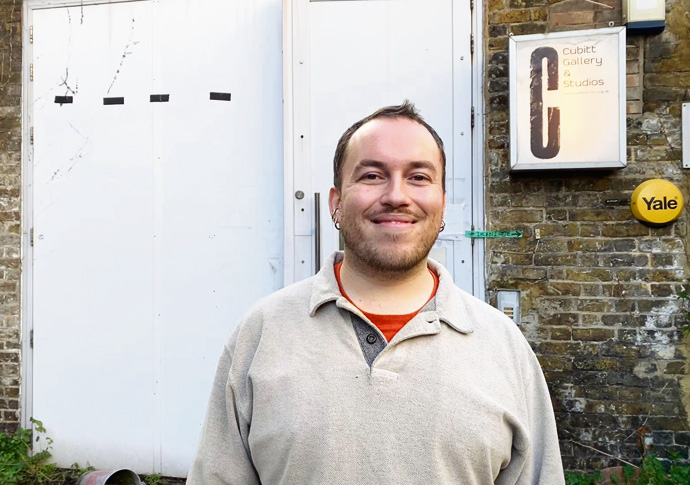
Cubitt programme director Seán Elder
While Cubitt’s gallery has a prestigious international reputation – celebrated artists Tacita Dean and Dexter Dalwood are among the alumni – it is also firmly rooted in the borough’s communities.
Pensioners take art classes there on the first Saturday of every month, students at the Arts and Media School Islington collaborate with Cubitt artists, and local residents dance to reggae and ska during live broadcasts of the in-house radio show, Gallery Shebeen.
As well as the gallery and the community programmes, Cubitt has more than 30 studios, where both established and emerging artists work.
Among them is Yael Roberts, whose large-scale mono-prints hang on the walls of the space.
She said: “At a lot of studios it can be very lonely, but in here, everyone is around a lot and willing to support each other. That has felt incredibly special, having other artists who can be friends and mentors.
“In the art world there are weird divides between emerging and established artists and I think it’s very rare to be in an environment where those walls are broken down.”
Ms Roberts told the Tribune that her work is about “what it means to make home anywhere” – something everyone in Cubitt’s orbit will soon have to reckon with very literally.
Mr Elder said: “Part of it is about inheritance. It feels so special to be working with people who have been here for decades.”
He added: “One thing I’ve really admired about working here is the freedom of expression, the autonomy, the trust between people. Our desire for Cubitt to carry on is shaped by that as well.”
Cubitt’s current landlords are a mother and two sons – Priscilla Ann Meath Baker, William John Clovis Meath Baker and Joshua Ralph Meath Baker – who also own several other addresses in Pentonville Road and White Lion Street.
They inherited the land from Ms Meath Baker’s father, John Gurney, himself descended from a wealthy banking family – Gurney’s Bank was one of several companies that merged to become Barclays in the late 19th century.
The Meath Bakers own the 5,000-acre Walsingham Estate in Norfolk, which includes a farm shop and vineyard, and Ms Meath Baker is a director of several arts and publishing companies.
The Tribune understands that there have not yet been any discussions between the Meath Bakers and Islington’s planning department as to whether the premises will be redeveloped in future.
