Artists are brushed aside by creeping ‘gentrification’
Gallery preparing to leave Angel home of over 25 years
Friday, 17th July — By Finn Logue
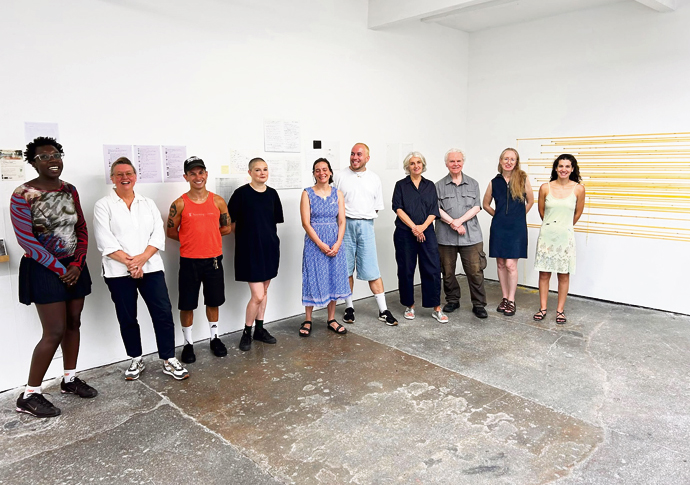
Cubitt Artists, central London’s last artist-run gallery
COMMERCIAL development, private housing and gentrification are pushing culture out of the city, central London’s last artist-run gallery have said as they prepare to leave their Angel home of over 25 years.
Cubitt Artists, an internationally-recognised gallery and community space in Angel Mews, were informed by their landlords last year that their lease would not be renewed.
They have since been searching far and wide across the city to find a suitable space to move into once the lease expires in October.
Mary Rinebold, the executive director, said that ideally they would want to stay within Islington, but that suitable and affordable spaces for galleries and other cultural hubs were disappearing from the borough.
She said: “We want to make sure that culture stays at the centre of what happens in Islington. Beyond finding our new space, we want to be part of a wider conversation to make sure other galleries and cultural spaces don’t have to leave.”
Ms Rinebold said that the gallery maintained a good relationship with their landlords, and there is currently no confirmation on what they plan to do with the space.
Part of Cubitt’s mission, Ms Rinebold said, has always been to engage with the intergenerational Islington community through its programmes.
If the studio was unable to find a new home in Islington, it could make some of its key funding sources precarious, and may make some of their educational programmes and community connections unsustainable.
“Gentrification is a key part of this conversation. We are seeing it on the ground, it is forcing people from inter-generational Islington families to move out of the borough. Younger generations need to leave because they can’t afford it,” she said.
“We can draw a clear line between development and people having to move out of the borough because of affordability.
“Culture can be at the heart of the conversation to build strong local communities, but it has to be able to thrive in Angel, in Islington, and in London.”
A recent report by the Roundhouse, a multi-arts venue in Camden, found that 87 per cent of 18 to 30-year-olds believed there were now fewer spaces to connect with others and be creative, compared to previous generations.
Cubitt first opened as a co-operative gallery in 1991, before moving to Angel Mews in 2000, after moving from their King’s Cross home at the hand of the area’s redevelopment.
As they prepare for another big move, Ms Rinebold said that the strength of the community support, including from Islington South MP Dame Emily Thornberry and local councillors, had been astounding.
Speaking on her involvement with the studio, Dame Emily said: “The world-famous Cubitt Artists have served the Islington community from their studios and gallery in Angel for over 25 years. Their educational and community programmes, as well as their co-operatively run affordable studio space, makes them entirely unique in central London.
“I am proud to have them in Islington and hope they remain here. They know they have my full support.”
Jamie Hammill, the studio manager, told the Tribune that although the prospect of moving was “daunting”, the team at Cubitt were doing all they could to preserve their work in the borough, and trying to remain positive.
He said: “Keeping spaces like Cubitt alive is so vital to keeping the creative heart of London alive. Especially at a time when there’s a crisis around cost of living and really high rent.
“Some of our artists have gone on to win the Turner Prize and had shows at the Tate, so it just goes to show that these kind of places can be incubators for arts and culture. I do feel gentrification is pushing these spaces out of the city. But what many people don’t realise is that the community impact and social cohesion these spaces bring will really be missed if they disappear.”
Cubitt Artists incorporates artist studios, non-profit gallery space and a community radio. Its education and public engagement programmes have been running for 13 years.
The property is owned by Priscilla Ann Meath Baker and her two sons William John Clovis Meath Baker and Joshua Ralph Meath Baker. The Tribune approached the Meath Baker family for comment, but received no response.
