Ballroom Boom
Before U2 redefined the Irish music scene, the showband dominated. Now a film celebrating them is due to be screened at the last existing hall, the Electric Ballroom
Thursday, 16th April — By Dan Carrier
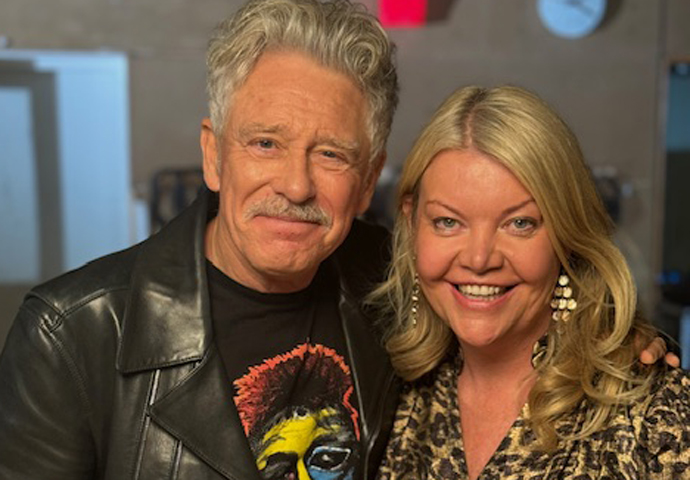
Adam Clayton and Kate Fuller
Bill Fuller left County Kerry in the 1930s to seek his fortune. The Irish-born music impresario built a global empire of dance halls – including the Electric Ballroom in Camden Town – and was a key figure in promoting a movement that revolutionised Irish music.
A new documentary fronted by U2 bassist Adam Clayton tells the story of the showband phenomenon. And next week Clayton will join Electric Ballroom owner Kate Fuller and film director Billy McGrath at a special London premiere.
Showbands enjoyed an extended run of popularity from the 1950s through to the 1970s. Playing slick cover versions of hits, decked out in smart stage costumes, following choreographed dance moves and all accomplished musicians, there were as many 800 such outfits making a decent living traversing the country and performing every night of the week.
Ireland was not a must-do destination for big-name stars – and so these showbands filled the void, covering chart hits in the absence of the original singer. It was also non-sectarian, and created a place where Catholics and Protestants could forget the Troubles and find common enjoyment.
Clayton reveals in the documentary just how important the showband movement was.
“Billy McGrath, a friend of mine and who we’d grown up with, came to me and said that he was keen to make a documentary about Irish showbands,” reflects the bassist. “The showband phenomenon is really interesting. Growing up in Dublin and travelling around Ireland, I remember seeing the posters. But the story’s never been told.”
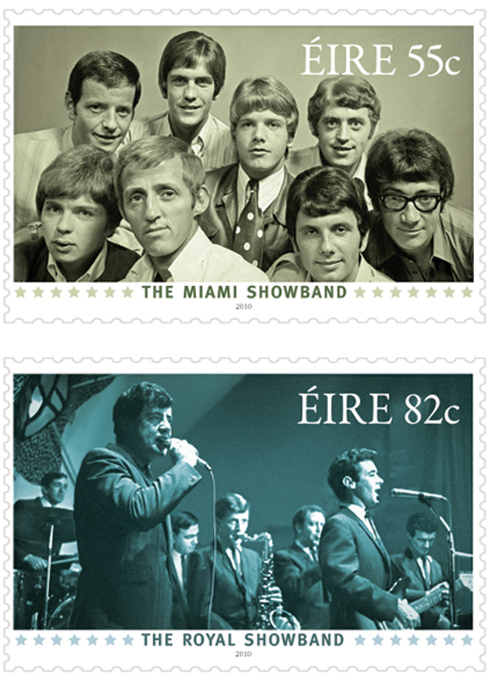
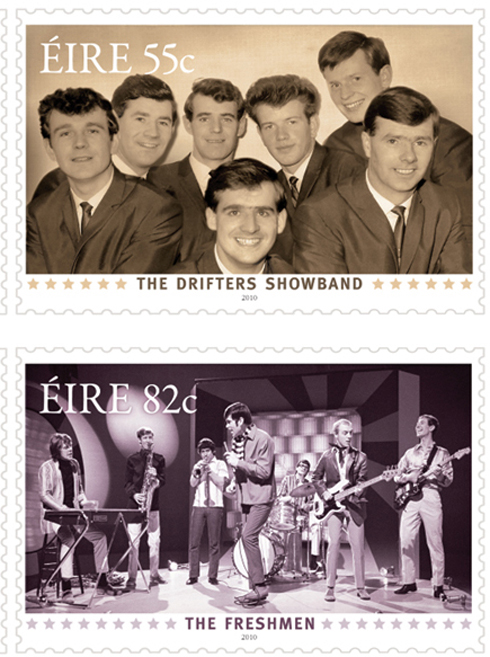
Stamps issued to celebrate the Irish showband phenomenon
The showbands were the product of a new Ireland, and surged in popularity following independence in 1949.
“By the early 1960s, showbands were forming all over and performing in parish dance halls before moving into newly built ballrooms,” adds Clayton. “It’s a period of Irish history where there was a lot of joy as young talented musicians and singers were getting into bands, and playing music that wasn’t being heard anywhere else.
“There wasn’t a national radio station then that played American or British pop music – that came later – so these bands would listen to US rock ’n’ roll, soul or jazz on American Forces Radio beamed in from Germany, or the pop station Radio Luxembourg. They’d then learn the chart songs of the day and play them live in ballrooms. One contributor called showbands ‘human jukeboxes’, which was apt. It was the beginning of the concept of stardom in Ireland. There were up to 800 bands at the peak of the ballroom boom, all earning proper money. It was a lot better than going to work in a factory or taking a job in agriculture, which were the alternatives.”
As the documentary shows, their popularity soon extended far beyond Ireland.
“A lot of singers, a lot of acts, wanted to break into Las Vegas,” adds Clayton. “It wasn’t that easy – but two showbands managed to do that. One was the Royal Showband who were a sell-out success in Vegas.
“Kerry-born Bill Fuller – who organised those Las Vegas shows – also owned the Crystal Ballroom in Dublin, which Bono’s dad and mum used to dance in. That venue later became McGonagle’s rock club in the 1980s, where U2 played many times. Bill ended up owning something like 26 ballrooms all over the world, and one was the Fillmore West in San Francisco, where the legendary Bill Graham promoted gigs for the 1970s psychedelic movement. Another was The Electric Ballroom in London that Fuller bought as a teenager after Hitler bombed Camden Town. It was the first ballroom he opened and the only one still standing.”
The film also considers a tragedy that befell the country’s leading showband in 1975. The Miami Showband massacre remains a powerful testimony to the horrific nature of the Troubles. The band were seen as the most popular of the many in the circuit. They had played a gig in Northern Ireland and as they headed back south were stopped by what they thought was a run-of-the-mill army checkpoint.
Instead, the armed gang who waved their van down were terrorists from the Ulster Volunteer Force. The UDF tried to plant a bomb in the band’s van, with the aim of making out it was an IRA hit. It went off as two terrorists hid the device beneath a seat. The UDF shot band members who had witnessed their attempts. The deaths of the musicians became a landmark, and they were mourned across the Eire and the north.
“Billy was interested to look at the impact of the murder of three members of the Miami Showband,” adds Clayton. “The Miami were packed with brilliant musicians – some hand-picked from Dublin’s beat scene – and were the number one band of the time. I remember the news of the deaths being on television, the bomb going off. That tragedy happened just when we were all starting to think about starting a band.”
For director Billy McGrath, the documentary was an important piece of social history and also allowed him to recall a musical movement that influenced generations and went wherever the Irish diaspora settled.
He said: “My passion and love of music started with showbands. There was one in particular – The Columbia Showband, which used to rehearse in the garage next to our rented holiday house in Co Wicklow. As a kid, I’d listen to them play the same song over and over. I never want to hear Is This The Way To Amarillo ever again. But those summer years were my ‘school of music’ and, at a time when the economy and the church had us on our knees, showbands brought Ireland’s youth to their feet.
“When Van Morrison, The Chieftains, Rory Gallagher, Thin Lizzy and The Boomtown Rats opened the ears and eyes of a new generation, the ‘copycat’ showbands faded away. But they had a huge influence on what came after and their impact is often undervalued and overlooked.
“Ballroom Boom aims to rectify that, and it was refreshing to see Adam Clayton, as filming progressed, conclude that the world in which U2 emerged would have been so different without the pioneering and unique musical force of the Irish showband.”
• Ballroom Boom will be screened at the Electric Ballroom on April 20, with Adam Clayton U2 and director Billy McGrath in conversation with Kate Fuller. Funds from ticket sales will be donated to the charity icap, which supports the Irish community in Britain. See https://electricballroom.co.uk/ballroom-boom/
