Body-in-bags killer takes secrets to the grave after death in prison
Police fear John Sweeney may have killed other women who disappeared in London in the mid-1990s
Friday, 4th September — By Richard Osley
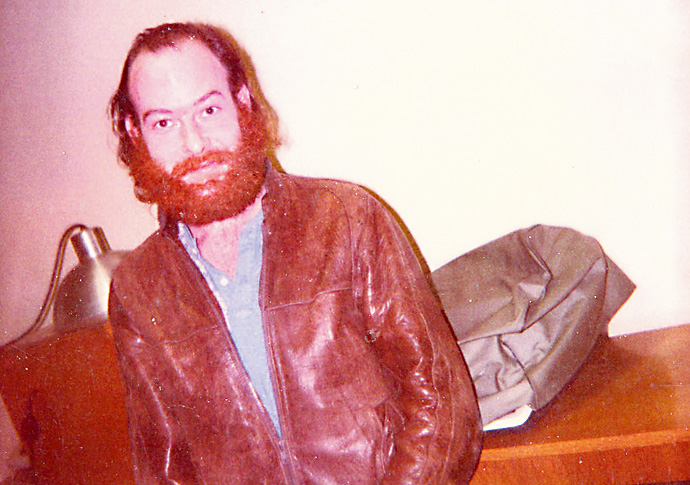
John Sweeney
A KILLER who left a dismembered body of one of his victims in bags dumped in the canal in Camden Town has died in prison.
John Sweeney, 69, escaped murder squad detectives for more than a decade after the murder of launderette worker Paula Fields in 2001.
Her remains were discovered when two boys trying to fish on the Regent’s Canal saw the holdalls floating on the water.
Ms Fields’ death became the subject of 10 years of appeals until the case was linked to the murder of another woman, Melissa Halstead, in Rotterdam, whose mutilated body was also found in canal waters. She died in 1990 but was not identified for 18 years. Both were found without their heads and hands, and Sweeney, who called himself “The Scalp Hunter”, would never tell detectives where they might be.
In a victim impact statement read to the Old Bailey, Irene Allahgreen, Ms Fields’ sister, said Sweeney should be forced by law to reveal the location of her youngest sibling’s head, hands and feet.

Melissa Halstead’s mutilated body was found in canal waters
“[Paula] has been referred to as a prostitute but to us, our family, she was our baby sister. For 29 years Paula was a normal girl, a loving mother, daughter, sister and aunt. We know she is never coming back and we never said goodbye.”
She added: “The person who did this should be made to explain the location of the body parts by law.
“Not understanding where or why is torture every day.”
Sweeney refused to come to the courtroom to listen to the statement from Ms Fields’ family or hear his life means life sentence.
Police fear he may have killed other women who disappeared in London in the mid-1990s and may have had relationships with him.
Several unknown women appeared in paintings found at his Kentish Town home, which appeared to reveal clues about his crimes and featured women whose whereabouts were not clear.
Again, when questioned, Sweeney would not help the officers trying to establish what had happened to a Brazilian woman called Irani, believed to have disappeared in the mid-1990s.
She frequented pubs and restaurants in the Highbury and Holloway Road areas, and Sweeney’s drawing of her is believed to have been done in 1997.
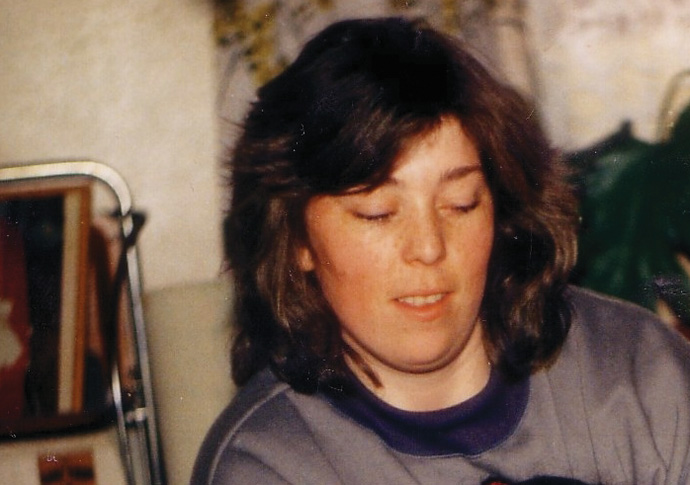
Paula Fields’ death became the subject of 10 years of appeals
There were also concerns for a Colombian woman named Maria, known in the same area, and an English woman training to be a nurse.
At the time of Sweeney’s conviction, Detective Chief Inspector Howard Groves said: “We don’t know what happened to these women. We just need to find out more about them and their relationship with Sweeney.
“We also need to identify another woman whose drawing was found among his possessions and is marked ‘London 1985’. We would urge anyone who recognises this woman as them or someone they knew to get in touch.
“We are appealing for information to trace individuals associated with Sweeney or people who know his exact whereabouts while he visited and worked across Europe in the 1980s and 1990s.”

Shaun Evans and Anna Maxwell Martin in Until I Kill You
Delia Balmer, his former girlfriend, has told of how she survived her relationship with him. She had been attacked with a knife and an axe, and wrote about her traumatic experience in her book, Living With A Serial Killer. Her story was then told in the ITV series Until I Kill You, with Motherland’s Anna Maxwell Martin playing her.
Both raised challenging questions about missed chances to potentially stop Sweeney before he harmed more women, and the poor treatment that Ms Balmer had received from the authorities when she explained what had happened.
The Sweeney case is not connected to Anthony Hardy, the so-called Camden Ripper who killed three women in his Camden Town flat in 2002, dismembering two of his victims and leaving them in black bin bags.
Sweeney suggested Hardy could have been to blame for his crimes as he dragged his victims through a five-week court case in which he insisted he had been framed for Ms Fields’ murder.
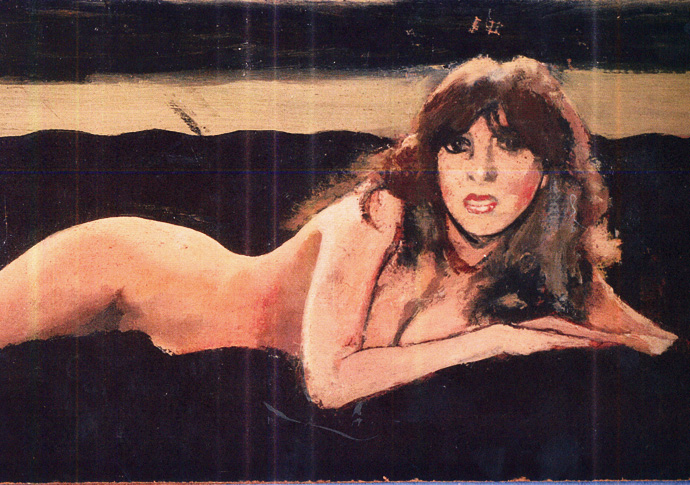
One of many of Sweeney’s artworks which police released in the hope of identifying women who had gone missing in Holloway
Originally from Liverpool, he had been working as a carpenter in north London but had been hired on construction sites across Europe using a number of aliases, such as Joe Johnson and Joe Carroll.
DNA tests on Ms Halstead’s remains in the Netherlands in 2008 were a key breakthrough when they matched with her family members.
Police in London, meanwhile, found Sweeney’s “demonic” artworks and a revelatory note scribbled on the back of a lottery scratchcard which said: “Poor old Melissa/ chopped up in bits/ food to feed fish/ Amsterdam was the pits.”
Sweeney had been told he would never be released and is understood to have died in Whitemoor prison in Cambridgeshire.
A Prison Service spokesperson said: “These were horrific crimes and our thoughts remain with the victims and their loved ones.
“As with all deaths in custody, the Prisons and Probation Ombudsman is investigating, and it would be inappropriate to comment further before the conclusion of its findings.”
