Coroner rules stem cell freezing problem ‘might' have contributed to Great Ormond Street patient's death
Tuesday, 25th November 2014
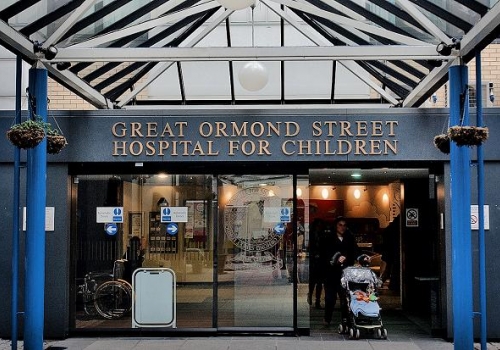
PROBLEMS with freezing stem cells at Great Ormond Street Hospital “might” have contributed to the death of a 12-year-old cancer patient, a coroner ruled today (Tuesday).
Senior coroner Mary Hassell found that Sophie Ryan Palmer could potentially have survived if her bone marrow transplant had been successful, St Pancras Coroner's Court heard.
The child, who had been treated for acute lymphoblastic leukaemia for ten years, died on July 17 last year after her frozen stem cell transplant failed.
The court was told that the three other children who also died following stem cell treatment at the Bloomsbury hospital in 2013, would most likely not have survived, because of the severity of their cancer.
The four patients were part of a group of eight who struggled to respond to the frozen stem cell treatment carried out between March and August last year.
The hospital made extensive efforts to trace the reason for the failures when they began to grow concerned in June but continued to carry out transplants until October after no cause could be found.
Ryan Loughran, one, from Bournemouth, in Dorset, was the first fatality on July 10.
Sophie, from Feltham in Middlesex, died on July 17, followed by Katie Joyce, 4, from Hoddesdon in Hertfordshire, on October 6.
Fourth patient Muhanna al-Hayany, 5, who had come from Kuwait to have the treatment, received stem cells at the same time but died in August this year.
Experts from University College London hospital later brought in to pin point the error found that the method or 'recipe' used to freeze the cells had inexplicably stopped working after ten years of success.
It revealed that the cells, though alive, were unable to mature properly.
Great Ormond Street have since overhauled its procedures to prevent further incidents including changing its freezing methods, increasing the number of quality meetings and seeking “fresh eyes” from outside more quickly.
Ms Hassell today made an official Prevention of Future Deaths Report to NHS England in which she said she was “very concerned” that there was not a national register of information to help doctors treating cancer patients share information on recovery rates.
“This could compromise the optimal care of some children with cancer,” she said.
She added that she was disappointed that the results of a medical trial in Vienna in 2011 had not been “unlocked” and shared with doctors.
“I'm very concerned that the clinicians treating children with cancer have been unable to unlock the results of the trial and that seems to be to be a very unsatisfactory set of affairs," she told the court. "I'm concerned for children in the future. I appreciate that nothing will help the children who have died. But I do have to have an eye to the future.”
The court was told that Sophie was the only patient would “might” have survived if her frozen stem cell treatment had not failed.
Ms Hassell said that the 12 year-old would not have received frozen cells had she not picked up a virus, causing her transplant to be delayed until she recovered.
As a result her donor was “not available” to make a fresh donation and so the cells were frozen, she said.
Her transplant failed after 35 days and despite a second transplant she went into multi organ failure and died on July 17.
Ms Hassell said: “It is unclear whether if a second engraftment had not failed she would still have contracted the virus. It is unclear whether a successful engraftment would have changed the outcome for Sophie, but it might have.”
She added: “It is not known whether those children who were successfully treated at Great Ormond Street Hospital between 2003-2013 received a good number of Colony Forming Units [the measure of whether a cell can mature successfully]. However, as the unprecedented engraftment failure of eight cases in 2013 the likelihood is that something changed at Great Ormond Street that year. It is still not known what changed.”
