Eco2026: Veganism needs a change of language, warns researcher
Ryan Bogle warns that hard-line warns will do more harm than good
Monday, 9th February — By Lloyd Bickham
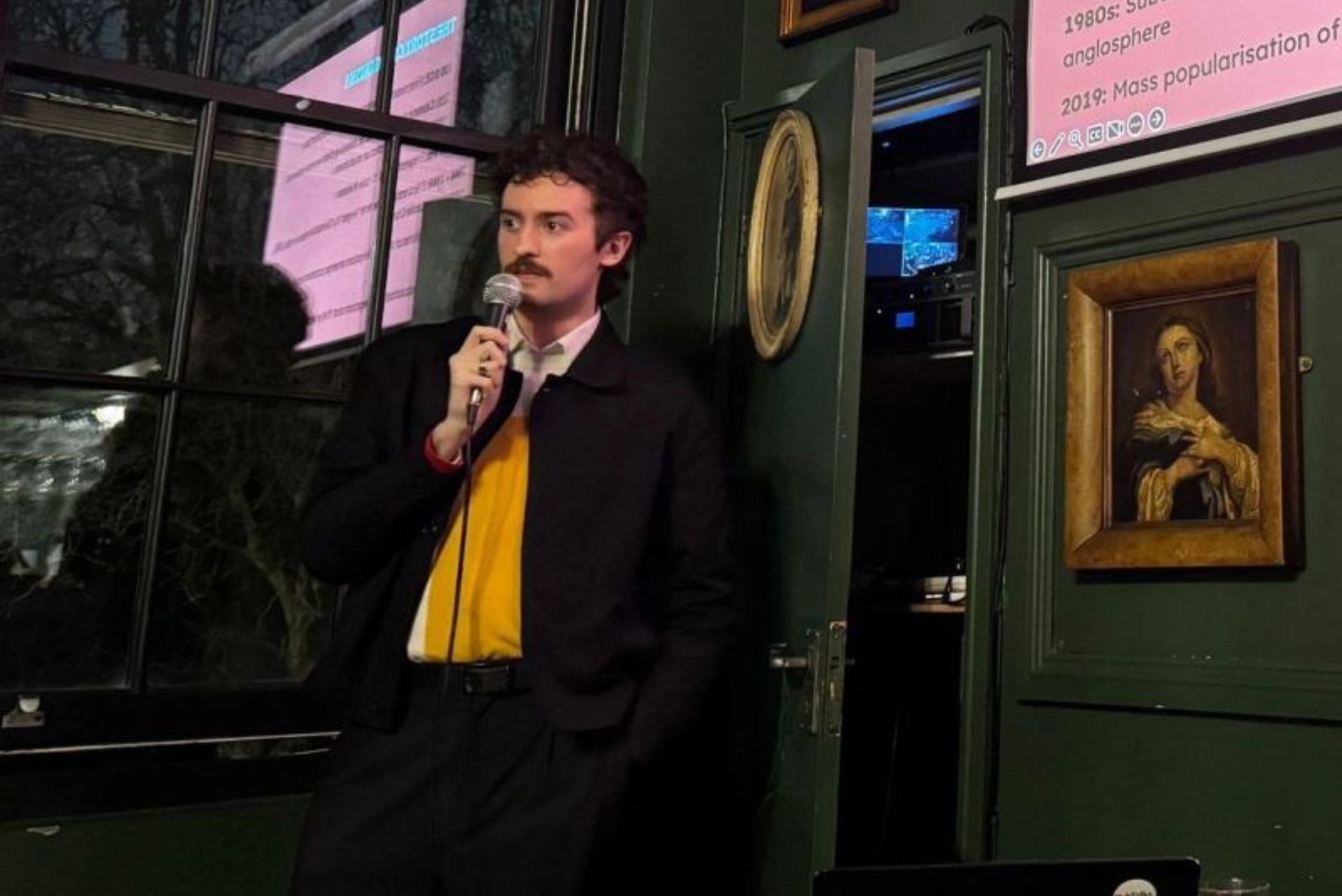
Ryan Bogle criticised a recent PETA campaign
A RESEARCHER has warned that hectoring lecturers will not convince more people to take up meat-free diets – and that vegans need to talk about plant-based food differently.
Ryan Bogle was speaking in the upstairs room at the Chapel Park Tavern last Thursday as differences of opinion were shared over ways to raise awareness for vegan options, the production of which are friendlier to the environment than intensive meat and dairy industries.
He said he was a vegan himself, although ate cheese on holiday and warned the crowd that he would “slag off [vegans] a lot” during his presentation.
“Veganuary” – framing veganism as a mission of self-improvement, like dry January or going to the gym – has ultimately done the cause harm, he warned, as has terminology like “plant-based diets”, which imply clean eating and dietary purity rather than focusing on other benefits.
So too has more controversial approaches by animal activists, such as PETA’s comparison between the number of people killed in the Holocaust with the amount of animals killed in Europe every hour for the meat industry.
“We need to reach out and reassess our language and communication as vegans,” said Mr Bogle.
“What I try to do is rephrase the same arguments in ways which are more outwardly friendly, rather than implying complicity or guilt to non-vegans. Bringing up the worst tragedy in history does the movement no favours.”
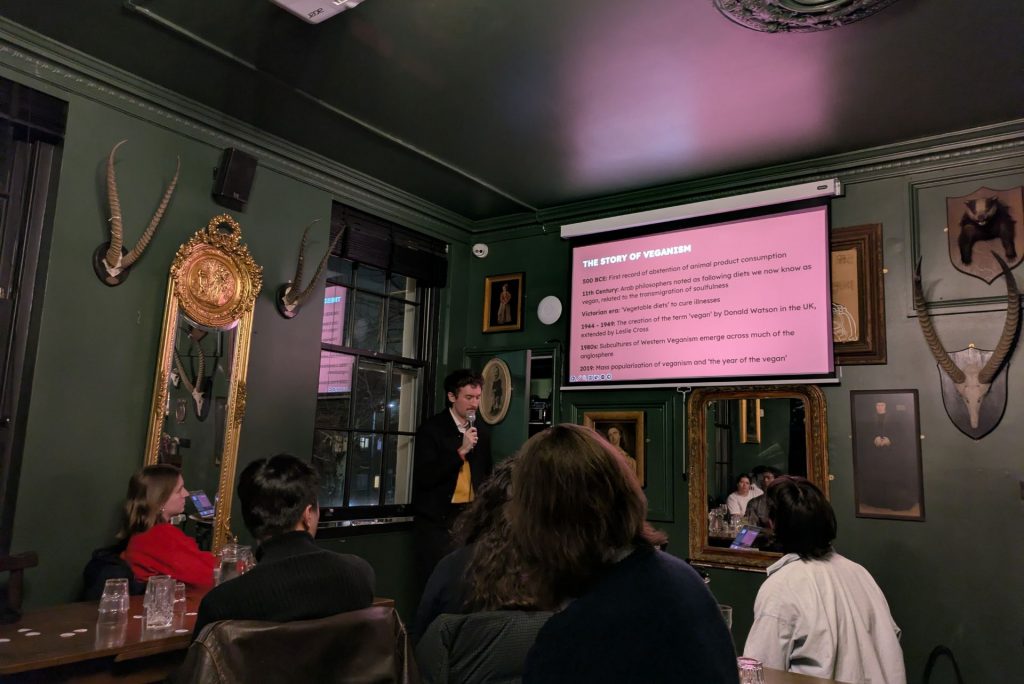
Ryan Bogle at the Chapel Park Tavern
Mr Bogle told how he hopes to “dethrone” plant-based health influencers in favour of messaging that focuses on the environmental and animal benefits of going vegan, citing an Oxford University study that found a vegan diet has just 30 per cent of the environmental impact of high-meat diets, which require more land and agricultural resources.
Producing meat is water-intensive, while famously a source of methane – emitting from the livestock – and fertilizer nitrous oxide.
Mr Bogle said: “In progressive movements, there are always purist approaches, and the fact that vegans are debating where they go from here is a symptom of how incredible the vegan movement has been so far in combating the meat lobby.”
But a full range of vegan views were aired at the talk and there were differences of opinion over understanding flexitarian diets in the context of expensive meat alternatives.
“The vegan movement is not plateauing, it really isn’t,” Mr Bogle said.
“Yes, we’ve lost some vegan food brands which all jumped into the market at the same time, that’s what happens when a new market emerges. Lots of companies jump in, not all of them survive. That’s how markets work, it doesn’t mean that veganism is failing.
“Vegans need to unite under the same umbrella despite the differences they have. There’s so much more at play.”
