Land's end? Farmer drama in Derek vs Derek
Documentary features two men who share the same name, but have very different approaches to the land they are the custodians of
Thursday, 1st October — By Dan Carrier
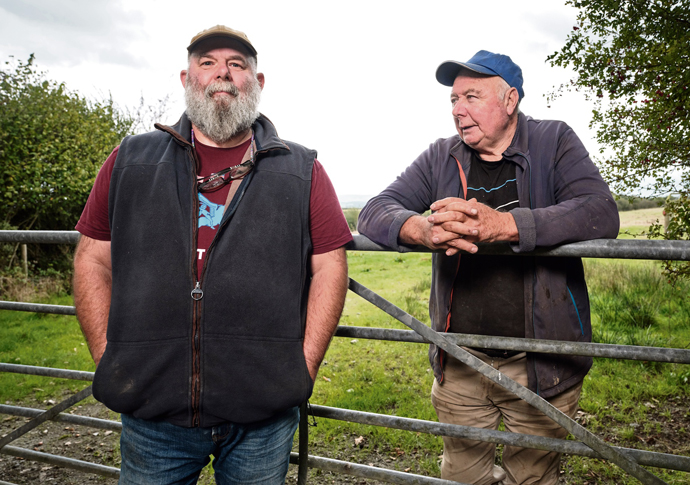
Derek Gow (left) and Derek Banbury, Devon farmers at odds in James Dawson’s documentary Derek vs Derek
DEREK VS DEREK
Directed by James Dawson
Certificate: 15
☆☆☆☆
BEAVERS sniffed out a badgers’ set in their pen on Derek Gow’s Devon farm. The buck-toothed dam builders went exploring via this earthen escape route and found a way out of the pen Derek had constructed for them.
Off they went happily into the rolling hills of that bucolic county, and added to their family: now beavers can be found through the Tamar river basin, and their impact has brought a range of ecological benefits.
The beavers are one part of Derek Gow’s attempt to redress a chilling imbalance in our green and often not very pleasant land. In this documentary, we meet two farmers who share the same name, share hedgerows but have two very different approaches to the land they are the custodians of.
Derek Banbury is a dairy farmer and steeped in the post-war technological approach to raising produce. He believes in intensive farming, and that it is his duty to glean as much from the earth as he can, in any way he can. He has a severe case of OCD when it comes to neatness, probably not the ideal tic to have if you own a farm.
Derek B plays up to camera as a wonderful caricature of a long outdated mindset.
As the film plays out, Linda Banbury – a caricature of a farmer’s wife – begins to make her mind up that Derek G isn’t quite the rebel. In fact, he is just talking straight-up common sense. Derek G cites the brilliant Gerald Durrell as a formative influence: “I read all his books as a child,” he says, and with that magic sentence, what he is doing makes even more perfect science. Durrell’s books influenced a generation to shake off the concept of the world being a human domain, a colonial mindset of man dominating our planet and the Earth being his to do with as he pleases.
This Victorian, Christian arrogance has removed us from the natural world and given us carte blanche to destroy it.
Director James Dawson attempts to set them both up as representing two very different opinions, but the issue at the centre of this “debate” is so painfully obvious. It feels occasionally condescending as we get a bird’s eye-view on how 70-odd years of intensive farming has been proven to be bad for all concerned, from the poor cattle to the land and the farmer, too.
