Food scheme seeks to offer more than crumbs of comfort
Partnership’s network is working to give people access to a healthy affordable diet, support local businesses, reduce waste – and bring the community together through food
Saturday, 21st February — By Daisy Clague
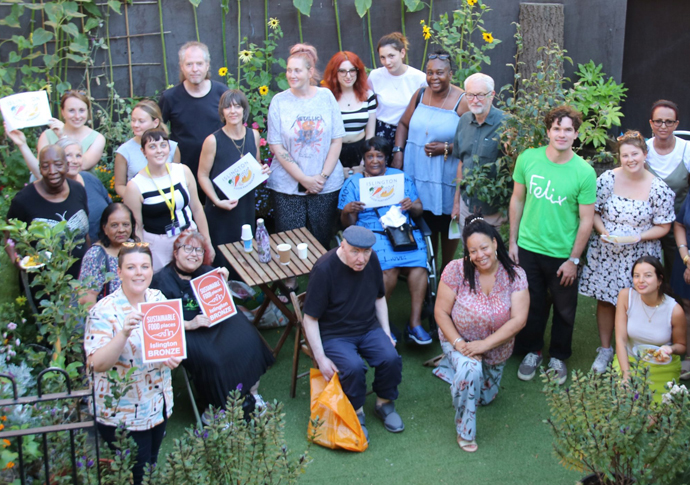
Islington Food Partnership grew out of the pandemic and has more than 200 members
ON Fridays in the Bemerton Estate, Jean Stokes Community Centre becomes a pop-up café serving a three-course, pay-what-you-feel lunch of plant-based, surplus ingredients, sourced from nearby shops and supermarkets.
Jean’s Cafe is part of the Islington Food Partnership, a network of food banks, community meals, schools, businesses and council services that make up the borough’s food system – and are working to make it greener, healthier, and less wasteful, all while bringing people together through food.
“I would almost go so far as to say we hope to benefit anybody who has any connection with food – which is obviously everyone,” said IFP manager Stephen Mawhinney.
The partnership is hosted by the Manor Gardens Centre in Holloway, and has more than 200 members, ranging from Copenhagen Street food bank, to the Parent House charity, to zero-waste shop Kilo, to Duncombe primary school.
It grew out of the pandemic when mutual aid groups popped up across the borough and was formalised into the IFP in 2023.
Mr Mawhinney said: “We want to make sure all communities have access to healthy and affordable food, and we want to help people eat more plant-based and reduce food waste, and if they’re throwing food away, to make sure it goes into a compost bin.
“We are for people who want the right to grow their own food, and we help businesses serve the community as well.”
He added: “You can end up talking about food as just a necessity, but we also want it to be a celebration, something that connects people.”
Jean’s Cafe is an example of this – most people are there for a warm community meal, and the climate-friendly credentials are just a bonus.
But for the organisations in the network, climate is an important factor, and the two biggest aspects they can influence are diet and food waste.
“If a local bakery bakes fresh bread that they have to sell by the end of the day, what can we do with the leftovers? If your local shop is throwing something away, where can we redirect it?” Mr Mawhinney said, adding that less waste also reduces costs for businesses. It’s a virtuous circle, so even if you’re the most hard-hearted cynical business owner, there’s still a good reason to be involved.”
Food redistribution charity The Felix Project collects food that would otherwise be thrown away from supermarkets and cafés around Islington, and brings it to the IFP’s members who in turn give it to food banks and cafés.
Reducing the amount of animal products in people’s diets is another way to reduce environmental harm through food, so IFP also focuses on breaking down the barriers to trying plant-based meals.
For Mr Mawhinney, the most rewarding element of the partnership is “Nourish and Navigate”, which joins healthy meals with signposting to other support services for people who are struggling.
“You realise that food is such an important starting point,” he said.
“There are a lot of barriers to asking for help, and people may be more wary to contact a council department directly than they are to come to a free meal.
“It’s not just the immediate need to feed your family, but can we help you change your circumstances as well?”
