‘Given how prolific plastic is in every part of our life, how have they managed to stay out of the public story for so long?’
As a new book explains, plastic is everywhere – even in our bodies. Peter Gruner talks to its author
Friday, 7th August — By Peter Gruner
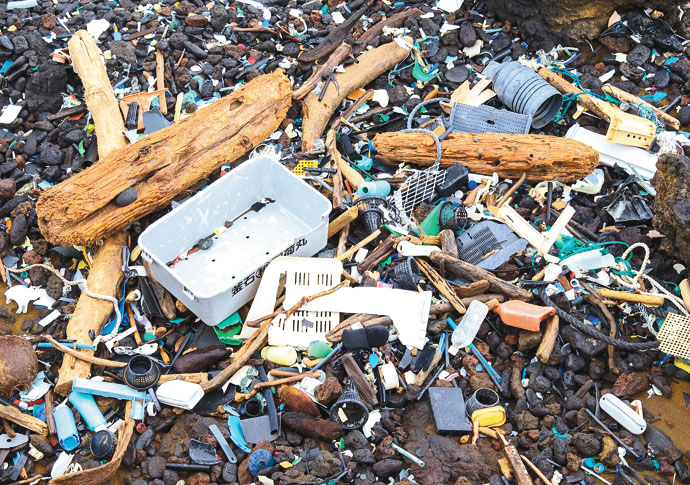
HEARD about the Great Pacific Garbage Patch? It’s the largest accumulation of plastic in the world and is now six times the size of the UK.
This island of waste, discovered between Hawaii and mainland America, is growing all the time, and now measures 1.6 million square kilometres.
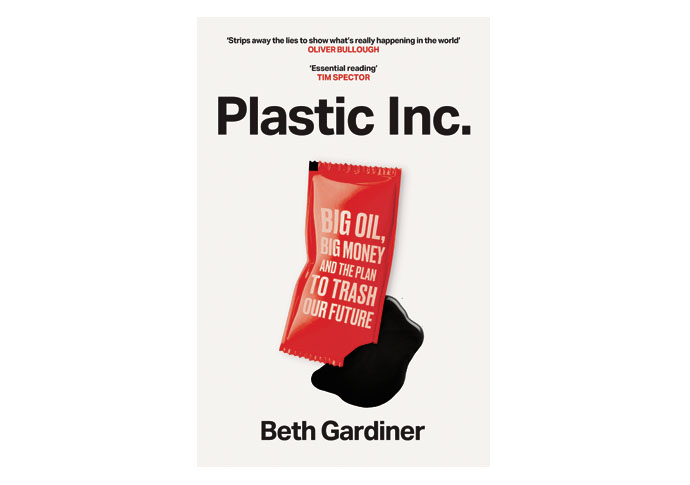
Finsbury Park author Beth Gardiner refers to it in her fascinating and disturbing new book, Plastic Inc.: Big Oil, Big Money and the Plan to Trash our Future.
Plastic is everywhere in our daily lives. But there is remarkably little discussion of where it comes from and what it is doing to the world and our health.
Beth Gardiner
In the book, award-winning environmental journalist Gardiner exposes the truth of the vast, rapacious industry flooding our world with plastic.
In the past 20 years, she writes, plastic production has doubled, and it will double again, perhaps triple, in the near future. The material takes an invisible toll on our health.
The chemicals that leach out have been linked to heart disease, cancer, fertility problems, and even neurodevelopment issues. Tiny microplastic particles now invade the air we breathe, the food we eat, and the water we drink, and have been detected in human brains, hearts, bone marrow, placentas, and breast milk.
Gardiner suggests that many oil and petrochemical giants are “hiding in plain sight”.
She asserts: “Given how prolific plastic is in every part of our life, how have they managed to stay out of the public story for so long?
“Part of the reason, I think, is that the companies at the centre of plastic production – the oil and petrochemical firms – aren’t consumer-facing. You’re not buying a plastic bottle from INEOS or Exxon Mobil. You’re buying it from a supermarket. So when the public does focus on corporate responsibility for plastic, it tends to land on retailers and supermarkets, or on consumer brands, like the companies selling shampoo, snacks, or bottled drinks.”
When China closed its doors to foreign plastic waste in 2018, it could have been a moment of reckoning – a firm nudge to wealthy nations to look clearly at the mess we were creating and find a different path. Instead the waste was sent to new places such as Surabaya, Indonesia’s second largest city. Residents watched the resulting wave of plastic crash onto fields, villages, and waterways.
Gardiner, who once worked in Indonesia teaching English, writes: “As China started restricting waste imports the volume of plastic landing in the sprawling archipelago nation spiked. Its neighbours Malaysia, Thailand and the Philippines experienced a similar deluge.”
Many of us try to reduce our personal use of plastic goods, but we are struggling, as Gardiner writes, against companies which have “foisted plastic upon us for decades and convinced us it’s our fault”.
She told Review: “I always try and remember to bring my own reusable bag to a store. But while some of us try hard, the bigger picture is that there are huge, incredibly wealthy and powerful companies that make all the plastic and just continue to make even more. I think we need to stop looking at ourselves so much and start looking at them. We as individuals are not responsible for the world’s mess of plastic. It is the industry that is pumping it all out. Before long, the industry will be making more than a billion metric tons of plastic annually.”
Gardiner’s previous book, about air pollution, titled Choked: The Age of Air Pollution and the Fight for A Cleaner Future, was named as one of the best of 2019 by The Guardian and was a finalist for the National Association of Science Writers’ Science in Society book award.
The book may have helped inspire Mayor of London Sir Sadiq Khan to launch a campaign to reduce air pollution and improve health across the capital.
• Plastic Inc. Big Oil, Big Money and the plan to Trash Our Future. By Beth Gardiner, Monoray, £22
