Gypsy and Traveller campaigners ‘anxious but hopeful’ over final consultation on sites
After more than 40 years with no official pitches for the GRT community, Islington is working to meet its legal obligation to provide ‘culturally appropriate’ accommodation
Friday, 5th June — By Finn Logue
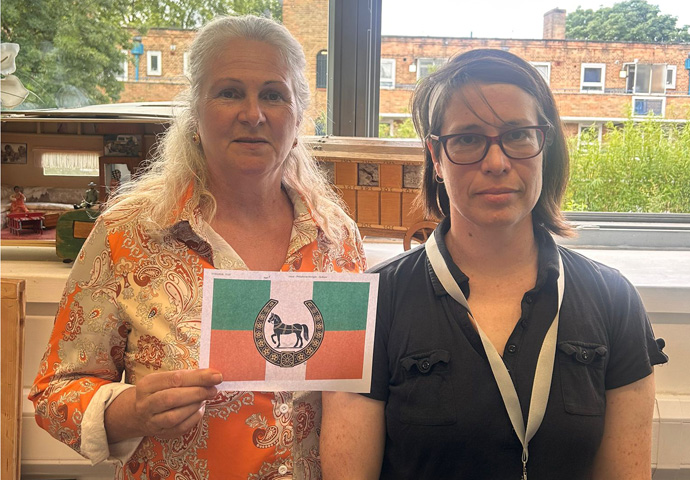
Philomena Mongan (left) and Nancy Hawker from campaign group London Gypies and Travellers
CAMPAIGNERS have said they are “anxious but hopeful” ahead of the forthcoming consultation round on proposed permanent sites for Gypsy, Roma and Traveller (GRT) community.
Islington Council suggested nine potential sites as part of their Draft Gypsy and Traveller Local Plan, which began its first round of consultation last November.
The next round of public consultation is expected to run from mid-July until September.
By law, local authorities have an obligation to provide culturally appropriate sites for GRT communities. There are currently no sites anywhere across the borough of Islington, and the last official site was dismantled in 1983.
As there have been no sites in the borough for more than 40 years, all members of the community live in “bricks and mortar” housing – something that campaign group London Gypsies and Travellers (LGT) have said is “culturally inappropriate” for the community, who have lived nomadic lifestyles for centuries.
Campaigners from the organisation said that the first round of consultations which ended in February was marred with discriminatory language and prejudice towards families within the GRT community.
Nancy Hawker, policy and research manager at LGT, said there are fears in the GRT community ahead of the next round of consultation, as they anticipate further backlash. She added that families who just want somewhere appropriate to live have been hurt by continuing objections from Islington’s residents.
She told the Tribune: “When it comes to opposition to sites, often it is ignorance. Members of the settled community see Gypsies and Travellers as outsiders, and they imagine that to bring them into a community will bring trouble and theft.
“What many people don’t understand is that they are already living alongside Gypsies and Travellers who are integrated in their community – these people just want to be living in culturally appropriate housing.”
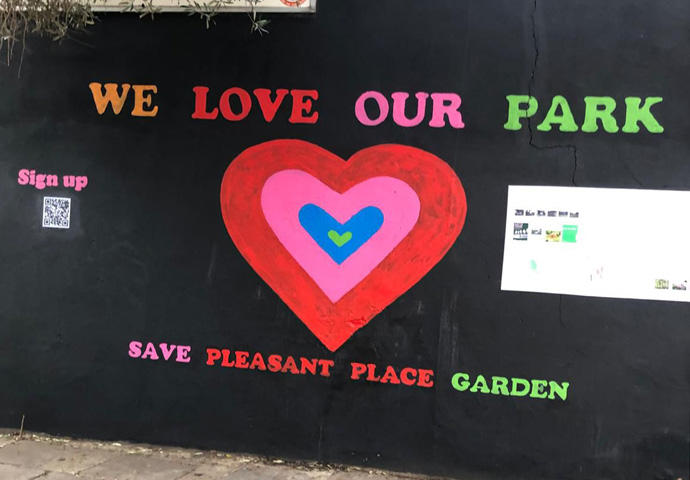
In the earlier consultation residents strongly objected to a proposed site on Pleasant Place Garden
Of the nine sites identified by the council, objections were submitted against eight, which the council will consider alongside viewpoints put forward in the next round of consultation.
One proposed site, on Pleasant Place Garden near Essex Road, received a strong backlash from nearby residents, including a petition online calling on the council to “protect their green space”.
Ms Hawker said: “Resident opposition was so strong in Pleasant Place that they hired an architect to landscape the garden and knock up proposals for a herb garden, objecting to the use of space by Travellers by arguing it was a vital green space.
“There are other green spaces just a stone’s throw away.”
Philomena Mongan, a community officer for LGT, added: “People have actually put their own money forward just to discriminate against members of our community having a culturally suitable home to live on.
“It’s sickening really. Maybe they could have looked at what is going on around them in their community and given that money to a food bank.”
But despite objections and continuing discrimination towards the community, LGT say there is reason to be hopeful and optimistic about the next round of consultations that may finally see sites being delivered in Islington.
By Ronalds Road in Highbury, a derelict site that has repeatedly been earmarked, graffiti has been written in support of its usage, despite objections from some nearby residents.
Ms Hawker said that Islington Council had been completely “transparent and honest” in their communications throughout the consultation process and were regularly meeting with the community to understand their viewpoint.
“Islington is a hopeful story because actually the council here is trying its best,” she said.
“A story that we see all too commonly in other councils are tactics to delay any action: they just want to kick the issue down the road so they never actually have to deal with it.
“Islington Council have been transparent and fair and shared all the information they could. They have made a point to block all discriminatory comments as part of consultation, which not all local authorities have done.”
The next round of consultations will begin in July.
