My contribution to greenhouse gas emissions has skyrocketed
Friday, 30th July 2021
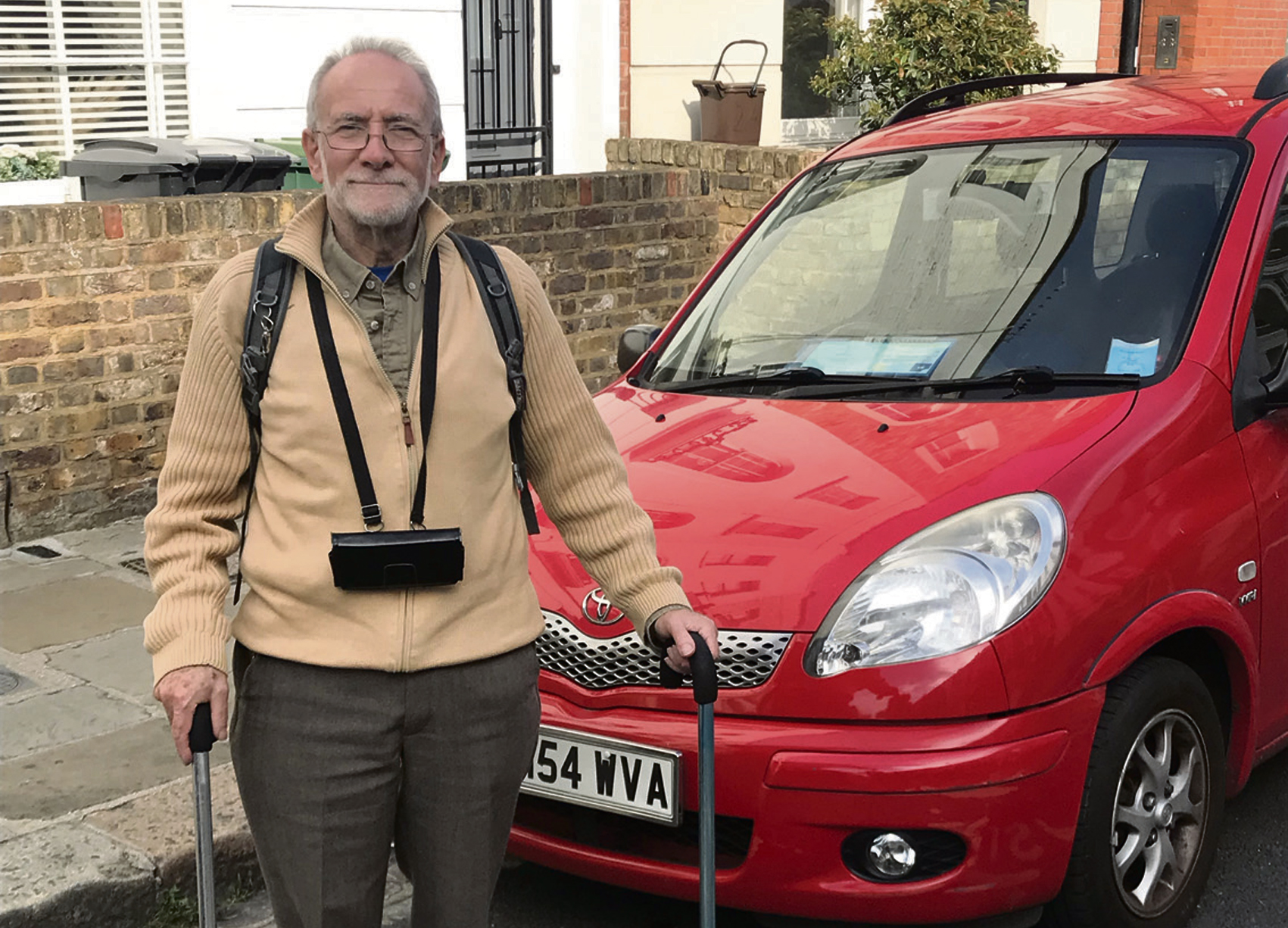
Bernard Miller: ‘I’m fuming, not greening’
• I’M fuming, involuntarily, my limited, previously controllable personal contribution to greenhouse gas emissions has skyrocketed.
It’s not my fault.
Since late 2019, four months before the country followed, I’ve been locked down. Until government declared me vulnerable, needing to shield, my limited outings were hospitals, doctors, blood tests and shopping.
With lockdown, shopping ended.
When Camden and Islington took advantage of the Covid-19 pandemic to implement radical or minor traffic changes to environmentalise, I was supportive.
The more people can be persuaded, encouraged and helped to use non-individual infernal-combustion engined vehicles, the better.
Until I got ill, I cycled for most journeys. I wish I still could.
I did and do favour limiting car school runs and readily approve of timed schemes restricting or preventing cars around schools, even though they sometimes inconvenience me.
I welcome limiting vehicle speeds, discouraging residential rat-runs, or trialing new measures, if they are monitored and assessed and feedback is used to refine and improve schemes.
Sadly, like many others, I cannot now cycle, switch to public transport, or walk. I walk with sticks but manage only a few steps.
The newest Grafton Road road closure nearly doubles some vehicle mileages, increasing considerably more my vehicle emissions.
My petrol car (I would love electric but cannot imagine affording to change during my life and driving time) is too old even for stop-start technology.
The new scheme funnels traffic onto narrower lanes on fewer roads, leading to horrendous hold-ups, such as Prince of Wales and Gordon House Road.
My GP’s practice is just over one mile from my home by routes still drivable. For a recent appointment I allowed 40 minutes for the previously 10-minute journey.
Fortunately it took 30, only 20 minutes of extra exhaust fumes! I felt guilty.
Visiting a friend at the far end of Grafton Road, previously four minutes, 1,400 yards, took 25 minutes, 2,000 yards, more than six times longer polluting.
Making few journeys I’m less inconvenienced than many but am really concerned about the impact of Grafton Road’s closure on Queen’s Crescent traders, shoppers, and deliveries.
To police road closures Camden Council uses Automatic Number Plate Recognition cameras.
The system identifies cars driving through, issues penalty notices, and can be programmed to allow certain vehicles through without triggering fines.
Is the aim to reduce pollution? It appears only to shift it a few blocks and increase it where cars end up.
Is it to reduce accidents and increase safety? If so, varied traffic management options in other countries achieve that better.
In France speed-operated traffic lights simply stop vehicles driving faster than local speed limits. In Holland selective road narrowings and landscaped pavement widenings cap speed, force careful driving in residential streets, and prevent larger vehicles using roads as through-routes.
How will success here be evaluated and when? What are the procedures for changing or even scrapping schemes?
To add insult to injury, with a GP form I used to get walk-in blood tests at the James Wigg Centre (just over one mile, and 10 minutes, from home).
The newly centralised, UCLH-administered, online scheme can take over a week to schedule an appointment there.
Since most of my tests are time-sensitive, when my GP orders one, I now end up driving to Hunter Street (about four miles, well over half an hour) polluting all the way. I cannot do it by public transport.
The Royal Free Hospital is less than 10 minutes from me, (previously 700, now 1,100 yards), but my GP cannot refer me there for blood tests.
So I’m fuming, not greening. Camden’s environment and residents are suffering.
BERNARD MILLER
Address supplied
