New pain for survivors of care scandal
Survivors told funding for ‘lifeline’ help to be removed by council
Friday, 9th January — By Daisy Clague
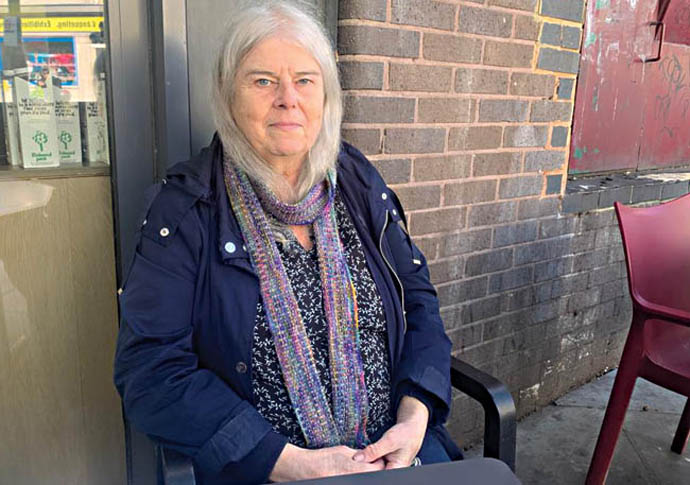
Dr Liz Davies, from Islington Survivors Network
TRAUMA services for the survivors of the Islington care home abuse scandal are set to close after a shock council funding decision.
The Town Hall – which described the decades of sexual abuse against children placed in council-run homes as the “worst chapter in its history” – has paid for therapy and other services for the victims since 2017.
But ahead of next week’s local budget announcement, the Tribune understands Islington has decided to pull funding for the support described as a “lifeline” for those affected.
The abuse took place from the 1960s to the early 1990s, while warnings of a paedophile ring were dismissed.
The cuts mark a contrast from last week’s news that Dr Liz Davies – the social worker who exposed the scandal and who has spent decades fighting for justice through the Islington Survivors Network (ISN) – would be receiving an OBE in recognition of her services to child protection.
ISN has helped some 800 survivors, including around 400 who received £10,000 through the council’s Support Payment Scheme, which ran between 2022 and 2024.
Dr Davies told the Tribune she was shocked and devastated by the impending cuts, which she learned about from survivors themselves, many of whom were informed via email.
“We’re picking up the pieces for these survivors who are panicking, because they have been told out of the blue that the services they rely on are being taken from them,” she said.
“We have already had some people saying that when it stops, they won’t be able to carry on. We’ve spent 10 years developing these services to the level of expertise they have, and now they will be gone.”
Cuts will affect three programmes: Islington Survivors Trauma Service at St Pancras Hospital, which lets survivors self-refer for therapy without needing to go via a GP or through a waiting list, and to which they can return whenever they feel they need to.
Islington’s Non Recent Abuse Team, which has helped some 200 survivors with practical needs related to housing, benefits, disability and more, will also be cut, as will a £31,000 per year grant to ISN itself.
Survivor Jane Frawley, who works with Dr Davies at ISN, said: “It made such a difference – it’s immeasurable. What Liz and a lot of the people that stood up and made a lot of noise for us did was make it so we didn’t have to go to the back of the list. We could call a number, say we had been in care, and then straight away we had a place where we could be heard.
“It’s a lifeline for many survivors, and one you can tap in and out of. The thing about long term trauma is it comes back, but if you take away those services, what do I do? Where do I go?”
Ms Frawley added: “It’s not easy when your history is as dark as ours, and we need support. It’s the least that we deserve, and it’s the very least that Islington Council can do. People were being paid to look after us, and they didn’t – in fact, they were being paid to torment, torture and abuse us.”
Any people who have accessed the services already will be affected by the cuts, but so too will those who have not yet come forward to identify themselves as survivors – Dr Davies estimates there could have been as many as 2,000 children who lived in Islington’s care homes when the abuse was going on.
Dr Davies said: “We have a dedicated team just for survivors, who they can access quickly and who understand what they have been through. To access general trauma informed support, they would have to go via their GP and there is a waiting list of about a year and a half. This isn’t the service they have had in any shape or form.”
The campaigners said it took years of work to set up the specialised service and this had been done so on the expectation that those services were not time-limited.
Dr Davies also highlighted a report by Sarah Morgan QC in 2018, commissioned by the council to look into allegations surrounding the care home abuse. Ms Morgan said in her report that she was struck by “the life long and continuing effects on those who were abused” and could see the “enduring harm and the continuing need for help”.
She added: “The direct contact I had with victims and survivors… helped me to understand, in a way I had not previously, the need to be able to trust that what is being offered will be enough and will not be taken away.
“Many will need access to specialist counselling or therapy; some will be ready to take that up as soon as it is offered; some may not be ready to take it up yet but may find that they are in a few years. It must still be available to them when they are ready.”
An Islington Council spokesperson said: “We’re deeply sorry for the council’s past failure to protect vulnerable children in its children’s homes, which was the worst chapter in this council’s history.
“We recognise how important specialist support has been for survivors and understand why news of change is distressing. We’ve been encouraged by the positive, productive discussions we’ve had with ISN about what the new model of support will look like and how it will work going forward.
“We’re committed to providing the broadest possible range of support to survivors in future and, alongside input from survivors, have had in-depth conversations with our own Non-Recent Abuse Team and health professionals at Islington Survivors Trauma Support service to understand survivors’ needs.
“We are grateful for the assistance ISN has provided to survivors and welcome their continued input. Our shared goal remains the same – to ensure that survivors continue to have access to high-quality, informed, compassionate and safe support in Islington.
“We have extended the funding of ISN to assist survivors on a recurring annual basis and throughout the lifetime of the Support Payment Scheme (SPS).
“The closure of the SPS in March this year, and the co-produced transition to a new, sustainable model of support for survivors in the long term, is an appropriate time to end our funding support for ISN.
“We are helping ISN to explore external sources of funding and retain a role in survivor engagement.”
