‘None of them bought yachts or houses in the south of France – they were not flash gits’
Paperback writer: Hunter Davies talks to Dan Carrier about how the post-war period made the Beatles what they are
Thursday, 5th November — By Dan Carrier
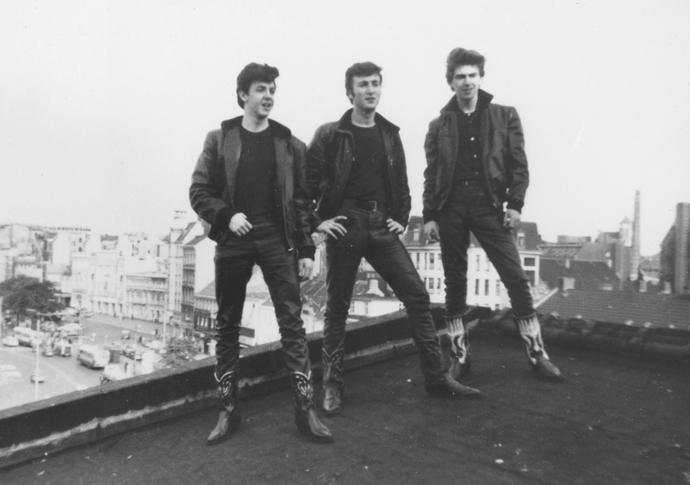
Paul, John and George – early days in Hamburg
BORN as war raged, forged in the aftermath: a generation grew up “when air raid shelters and rationing were normal… never seeing a banana and assuming eggs would always come dried,” so writes author Hunter Davies.
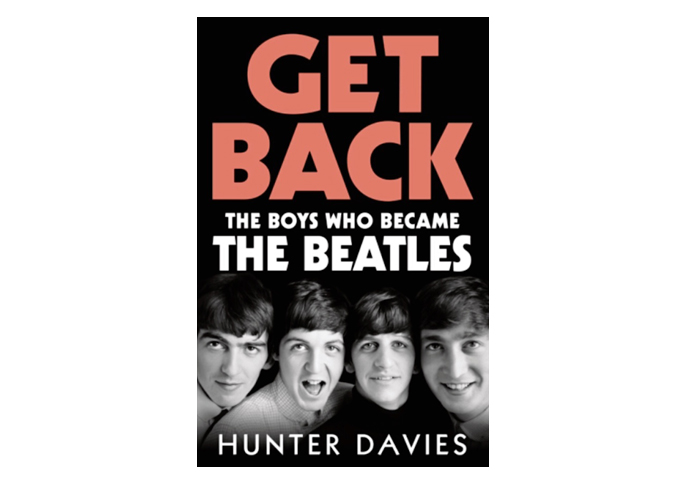
Hunter’s latest book, Get Back, tells the story of how four boys born during the Second World War would grow up to change the world – the four being The Beatles, the band for which Hunter wrote the only ever authorised, official biography.
Drawing on 39 notebooks of interviews he conducted with John, Paul, George and Ringo, and their families – and intertwining his own experiences of being a working-class northern lad who lived through a period of massive changes in British society – Hunter’s new book on the Fab Four not only tells the stories of the childhoods that created them, but considers what magical catalysts took place in British society in the 1950s and 1960s that brought four working-class Liverpool lads on to a global stage.
“It is a social history,” explains the Dartmouth Park-based writer and journalist, who has over 100 books to his name.
The idea was prompted by the fact he had reams of material he did not use in his original 1968 book – and the fact that The Beatles are constantly finding new fans and have never disappeared from our cultural lexicon.
“About a year ago, it was announced Sam Mendes was making not one film about The Beatles, but four – four full-length films about each one of them. I thought this is incredible – how will they do it?,” he reflects.
It prompted Hunter to look back and consider what came together in Britain in those post-war years.
“I spent three years – 1966, 1967 and 1968 – with The Beatles,” he adds. “I sat in on their sessions at Abbey Road and I interviewed them over many, many months.
“I filled up notebooks about their childhoods and by the time I got down to writing the book,I had so much material, there was just not the room for everything.”
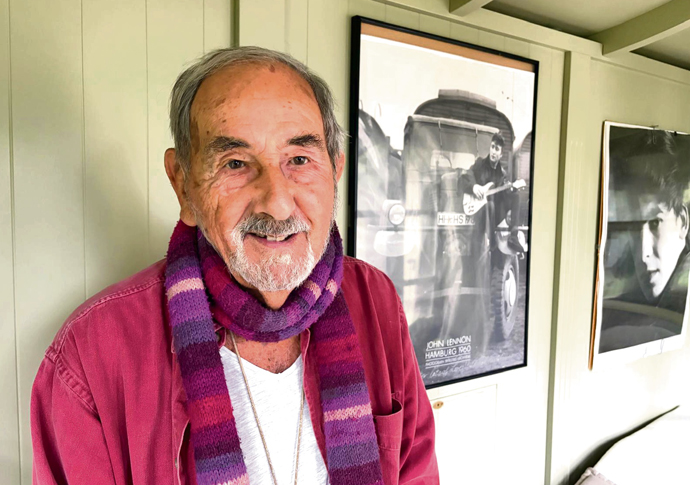
Hunter Davies
Along with other Beatles ephemera he collected – including scraps of lyrics, pictures, and letters – Hunter donated his Beatles archive to the British Library.
“Writing this book meant I had to go back and borrow my own notebooks,” he says.
It took him on a magical tour back to his own childhood.
“I wanted to look at the social history, at their backgrounds,” he says.
“I was three or four years older. I went to school in the 1950s, and remember rationing and air raid shelters. I only ever knew the war growing up and we had that in common.
“John’s big fantasy as a child was owning a green Raleigh Lenton Sports bike with Sturmey Archer gears. And I too longed for that very bike as a boy. I grew up in a council house like George and Paul. Their homes were exactly like mine. Like the Beatles, war and rationing was what we knew about the world as children.
“And we did not feel deprived or unlucky.”
While writing the original biography, he became friends with the band.
“During the three years, visiting all their homes and each of them visiting my house, I discovered so many things we had in common,” he adds.
“I spent a lot of time with Paul’s dad, John’s dad, both of George’s parents and Ringo’s mother and stepdad. I also spent time with Brian Epstein and his mother, with George Martin and his wife… all of them had such an influence on the lives and careers of the Beatles. All of them now long dead.
“In the biography, I did not use everything from heir early years. I had so much material from when they were fab. I never, of course, thought there would be so much interest in them, decades later. Or that folk memories would still linger about the war and post-war years.”
What strikes Hunter as he looks back through the decades is how the post-war settlement opened up a new world for working-class people. From new opportunities in work and education to decent council homes and an NHS, such collective investment in everyone’s wellbeing created the conditions for a band like The Beatles to happen. It helped forge the conditions for Britain’s incredible, cultural soft power of the 1960s – similar in impact to the industrial power of the Victorian period.
“I wanted to write a social history, but not a heavy book. I didn’t want a chapter on the Beveridge report, but to explain how the world was and how it helped the Beatles happen: for example, Ringo spent half of his childhood in hospital – and but for the NHS, he would not have got the medical attention he needed.
“If it weren’t for the post-war reorganisation of secondary education, John, Paul and George would not have gone to grammar school.”
He wonders whether the trend of communal singing during the war – a way of keeping spirits up – was part of a musical culture they would benefit from. And he ponders on the impact of life being so utterly precarious had on ambition.
“In Liverpool the bombing was appalling,” he adds. “People realised during the war that when it was over, things could not just go back to how they were. We have to make the UK a better place for everyone, we have to have an NHS, comprehensive education, new housing. People had to be rewarded for their efforts during the war – and both Labour and the Tories believed that.
“And did the social conditions and the deprivation caused by the war make us the people we are? I like to think of the waste not, want not attitude, the discipline, the not having things easy – and yet thinking we were fortunate and lucky.
“I think that was reflected in the Beatles as they became famous: they were never flashy.
“Paul, for example, was always a very careful person and he just never wanted flash things. John famously bought a Roller and then had it painted for a laugh. The fact he did that was big news.
“None of them bought yachts or houses in the south of France. They were not flash gits and it was their upbringing. Their parents scrimped and saved and wanted the best for their children and they all appreciated what they had. They did not have it easy.”
And looking back at interviews conducted in the 1960s – Hunter had moved down from Carlisle to London, and worked on the Sunday Times before approaching the Beatles with the idea of writing their life stories down – he is struck by the fact the band’s three song writers grew up together.
“John and Paul did inherit some music talent, but it still strikes me as incredible,” he reflects.
“These three boys – I include George – happened to be brought , up at the same time, same period, same place, same conditions, each being so creative, they could write music, they could write songs, they could write words.
“Gilbert and Sullivan just did one part of the composition, Andrew Lloyd Webber, the same: John, Paul and George could do it all. They could write songs on their own, write the words and music, and then sing it and play it.
“Today, football crowds all around the world sing Hey Jude and Let It Be. They have become folk songs. The further you get from The Beatles, the bigger they become.”
• Get Back: The Boys Who Became The Beatles. By Hunter Davies, Ebury Press, £25
