One day we might be able to rule time travel out but not yet, there is still a lot to learn
For our STEAM 2026 special, Caitlin Maskell talks to one of the most engaging voices in physics, the broadcaster Professor Jim Al-Khalili, whose new book explores how the ticking clocks can feel fast or slow at different times (... so yes she asked him about movie time machines)
Friday, 28th August — By Caitlin Maskell
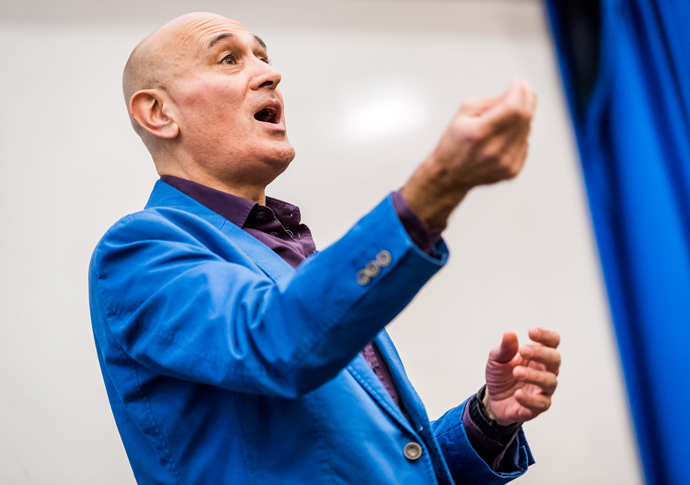
Professor Jim Al-Khalili
DOES time ever feel like it speeds up as you get older, or slows down when you’re in the dentist’s chair?
Does it seem to pass very quickly when you’re having too much fun, or painfully slowly when you’re stuck in a boring meeting? Is time even real? Is time travel possible? And is time the same for you as it is for me?
Time is one of the most complicated notions that exists – and something that the majority of people don’t fully understand.
“Its a topic that most people have some investment in,” said Jim Al-Khalili, theoretical physicist, professor at the University of Surrey and BBC broadcaster.
“With time, everyone has a view, it’s one of those subjects that we have been thinking about for thousands of years.
“What does it mean to say ‘now’ or does the future exist yet? And does the past still exist and what does physics have to say about that?
“Did time have a beginning, will it ever come to an end? Does it repeat itself?
“Time is a wonder. Weird things really do happen and with time there really is so much wonder.”
Professor Al-Khalili, well known as the host of BBC Radio 4’s The Life Scientific, has written 15 books, spanning topics such as quantum biology, aliens and Arabic science.
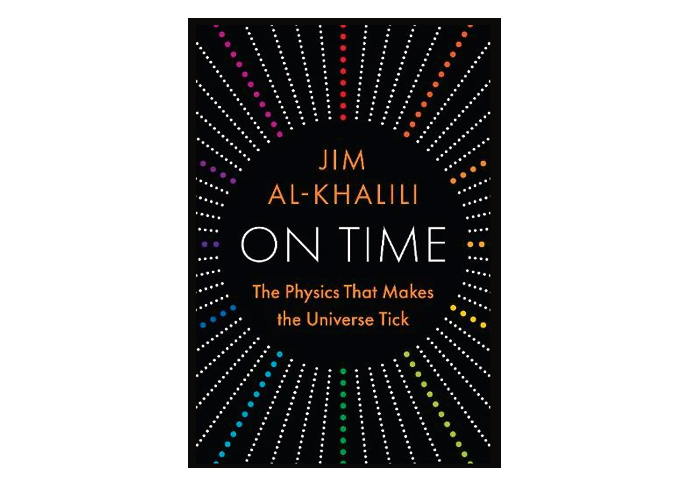
He has now chosen to tackle the subject of time in his new book On Time: The Physics that Makes the Universe Tick.
On Time tries to answer some of the head-scratching questions we have about the mind-boggling notion from our current understanding of the laws of physics.
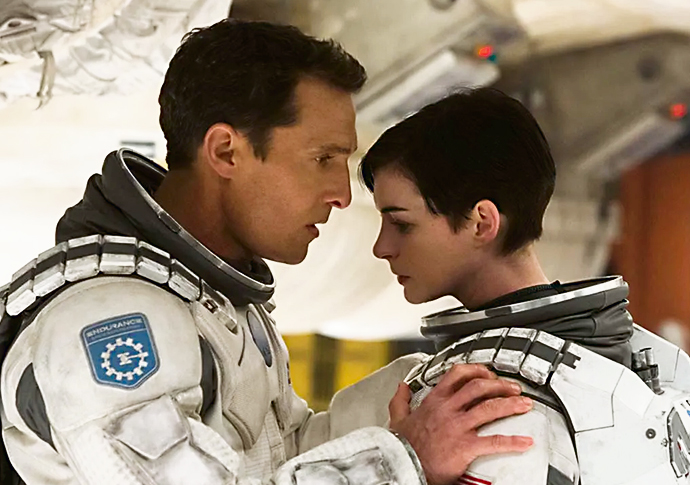
Matthew McConaughey and Ann Hathaway in Interstellar [Paramount Pictures]
Speaking to the Tribune he said: “A lot of the stuff we do know we have known for a 100 years since Einstein’s theory of relativity which is probably our best theory of the nature of time, and we understand that the force of gravity does slow time down.
“The further you are away from Earth the faster time will run, because gravity gets weaker.
“Time doesn’t run at the same rate for everyone, there is no absolute time. It depends on how fast you’re moving, it depends on how strong gravity you’re feeling – time runs slower on the Sun than it does on Earth, time runs slower on Earth than it does on the Moon, time runs faster in deep space where there is no gravity. There is no such thing as the same time for everyone, it changes, it’s relative.”
Professor Al-Khalili said that the science behind the 2014 Hollywood blockbuster movie Interstellar, starring Matthew McConaughey, all checked out – that time in black holes really did run slower – but that other science fiction films weren’t as realistic, although a good distraction from complicated theory.
“I’m one of those scientists that doesn’t get annoyed if a science fiction movie gets science wrong,” he said.
“The clue is in the word fiction. I don’t think that when Thor is flying – that he’s breaking the laws of physics.
“I am constantly thinking of serious things like the nature of reality and the universe – it’s nice to step away and watch something that is pure fantasy.”
On big questions – like time travel and whether it will ever be possible to straddle time – the theoretical physicist said our mathematics tells us it is possible until we can rule it out.
He added: “Our current view of time says it is possible to travel through time into the past, into the future but we know there are problems associated with that such as paradoxes.
“But the fact that our mathematics tells us it is possible until we can rule that out, we have to entertain that possibility.
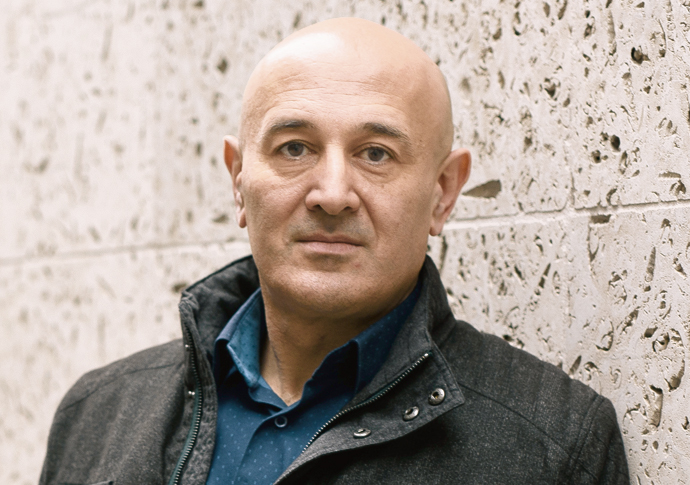
Professor Jim Al-Khalili and his new book, On Time
“If I’m a betting man I would say with a better understanding of the rules of physics, and of course we don’t have a full understanding yet – we may close those loop holes in the possibility. We might rule out time travel completely, and that would be a shame, but I suspect that is what is going to be the case.”
Professor Al-Khalili was born in Baghdad, but left Iraq when he was 16, two weeks after Saddam Hussein came into power, moving to Portsmouth with his parents.
He said he wanted to be a physicist as a teenager, because while physics was not everyone’s cup of tea, it was about puzzle – solving, and almost like “common sense”.
Studying physics at the University of Surrey, he said it was tough for the younger generation now, when in his time, the choices of life were much simpler.
He said: “I think in some ways there is more access and more possibility for people to be exposed to science and be inspired by it.
“When I was a kid, if I wanted to find something out there wasn’t the internet, there weren’t even people I could ask to get an answer, so it was frustrating. In that sense now it’s a lot easier.
“But there are barriers that maybe didn’t exist before because there are pressures on young people that didn’t exist before.
“Life was simpler before the complications brought about by the modern world and technology.
“There are lots of tensions and pulls in lots of different directions for young people whether it’s finance, choices about careers, how will I pay off the debt to go to university, taking a job that will be done by AI anyway, making young people question what’s the point?
“The choices were simpler then, and now in a sense there is more choice and it makes it tougher. I do feel sorry for the younger generation having to make choices when they are bombarded by so much information, much of it, dodgy, false, misleading, it’s tough.”
Science, he said, wasn’t about making it look easy for young people, but celebrating the fact that it was a challenge to understand.
“I want people to appreciate something that is complicated, to excite them, inspire them. The fact it is complicated makes it so wonderful.”
He added: “If it was all bland, boring and straightforward – so what?”
