Pandemic was ‘4/5 likelihood' on risk register
Cabinet Office knew a pandemic was likely
Monday, 20th April 2020 — By Richard Osley
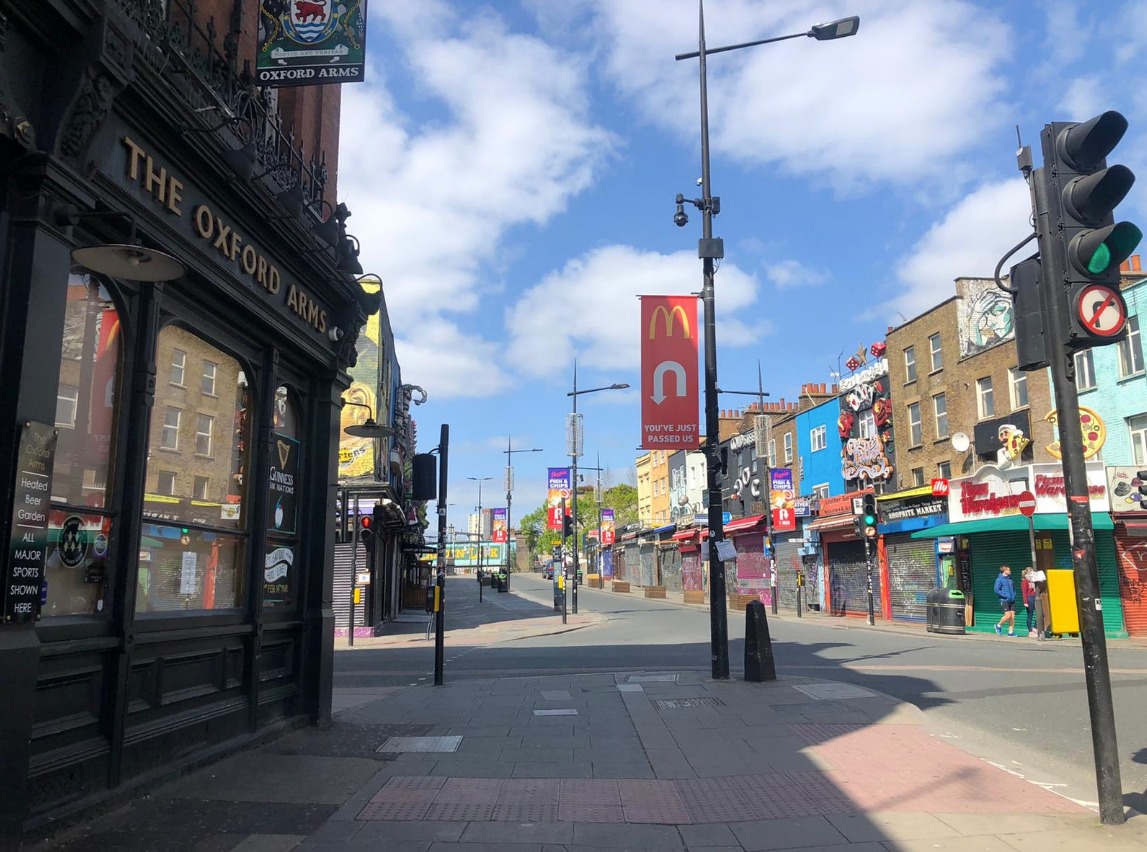
Camden Town left unrecognisably quiet by the coronavirus lockdown
WHILE most people had not expected 2020 to be turned upside down by the spread of a global illness, the likelihood of a pandemic occurring at some stage was so well known by government figures that it had filtered down to Camden Council’s own ‘risk register’.
Documents prepared for council chiefs keep a running check on dangers which could upset their plans and cause turmoil in the borough. This rolling ‘risk register’ maintained by Camden rated a ‘pandemic flu’ as a four out of five likelihood. It also rated it five out of five on the scale predicting how damaging the impact of such an outbreak would be.
Other events in the 4/5 likelihood bracket on Camden’s register include terrorist attacks, heatwaves, volcanic ash in the air and road accidents on major roads – but not of them came with the same impact risk level.
5/5 likelihood events include building collapses, cyber attacks and industrial action among emergency services but have lower impact scores.
The presence of pandemic flu on local risk registers across the country has added scrutiny on whether the government should have done more to be prepared.
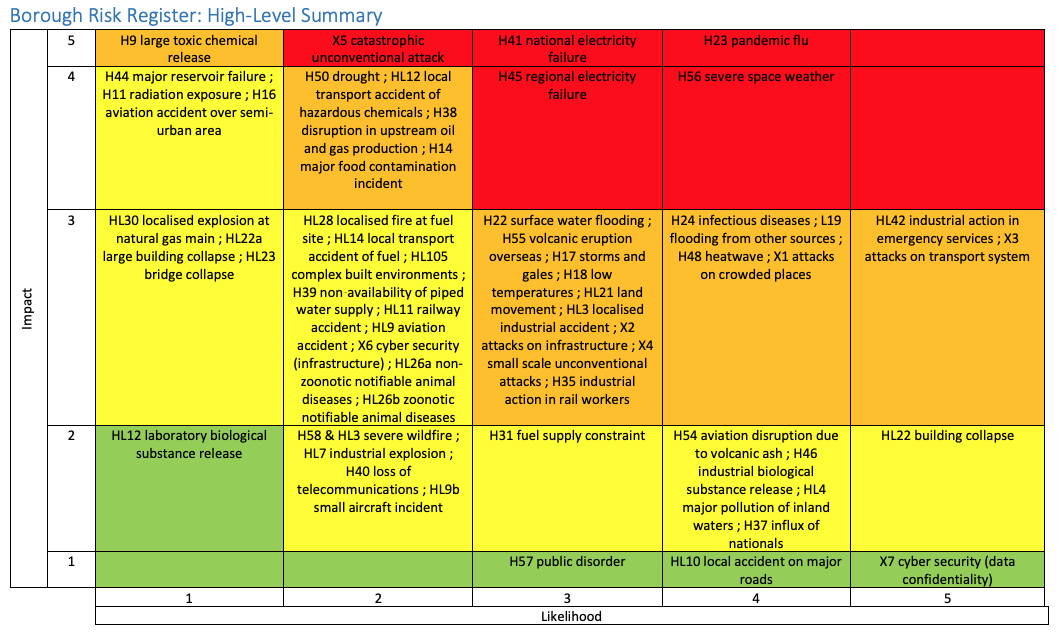
The information on pandemic risk was fed to the Town Hall and other local authorities by Public Health England.
“A worldwide outbreak of influenza occurs when a novel flu virus emerges with sustained human to human transmission”, said the council’s risk register entry. “Up to 50 per cent of the population may experience symptoms, which could lead to up to 750,000 fatalities in total in the UK.”
The current coronavirus is not forecast to cause 750,000 deaths in the UK and the government’s changed strategy during the current outbreak was said to be an attempt to scale down from one adviser’s prediction that light touch measures could lead to around 250,000 deaths. So far, more than 15,000 people have died in hospitals, however.
“Absenteeism would be significant and could reach 20% for 2-3 weeks at the height of the pandemic, either because people are personally ill or caring for someone who is ill, causing significant impact on business continuity,” the council’s document said.
“Each pandemic is different and the nature of the virus and its impacts cannot be known is detail in advance. Based on understanding of previous pandemics, a pandemic is likely to occur in one or more waves, possibly weeks and months apart. Each wave may last between 12-15 weeks.”
There have been warnings that even if lockdown comes to an end in the UK and a peak of cases is passed, the danger of a second wave remains.
The prediction in Camden’s documents comes from and mirrors the government’s national risk register which contains strong warnings of a pandemic risk.
“Experts agree that there is a high probability of another influenza pandemic occurring, but it is impossible to forecast its exact timing or the precise nature of its impact,” the cabinet office document said.
