Phone addiction warning over children’s mental wellbeing
Health expert leading push for ‘smartphone free’ schools in Islington
Friday, 20th February — By Daisy Clague
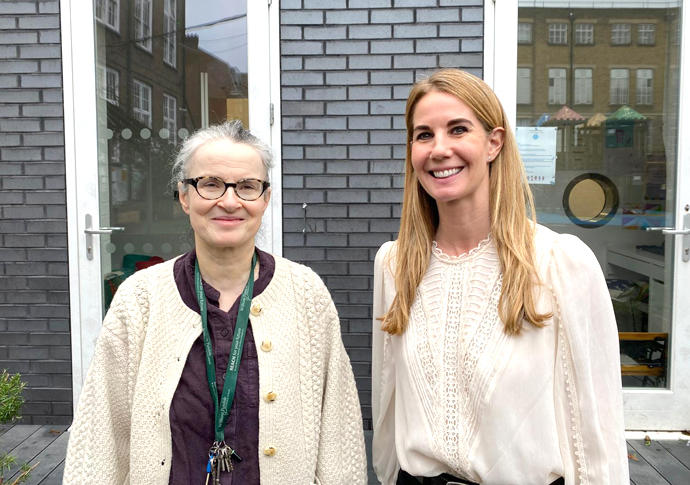
Pastoral support teacher Alicen and mental health expert Nova Eden at William Tyndale School
UNFETTERED access to smartphones is damaging children’s wellbeing, warned a child’s mental health expert at an Islington primary school.
More than 100 schools in Barnet went “smartphone free” last year thanks to a campaign by Smartphone Free Childhood, led by Nova Eden, who now hopes to push for similar change in Islington.
Last Friday she held her first talk in the borough at William Tyndale primary school in Upper Street, where she told of the risks to children who have the internet in their pocket 24/7.
“We are all using our phones too much,” Ms Eden said. “They are designed to be highly addictive. If we’re finding it hard, it’s almost impossible for these young kids to self-regulate with their phones.”
She told of rising levels of depression, anxiety, self-harm and even suicides in children – all correlated to social media use and the chronic comparison, bullying, sleep disruption and harmful content that can come with it.
Some of the stories are horrifying – of eight-year-olds watching pornography on sleepovers or young children using front-facing cameras to send nude photos of themselves that are then forwarded on.
Ms Eden also highlighted problems with specific apps, such as the world-building platform Roblox, where one such “world” that children could enter is the scene of a mass school shooting in the United States. And for many young boys, gaming is the biggest challenge, she said.
“Tech companies are fishing for our boys and using dopamine as bait.
“Our kids are getting so used to the unnatural amount of dopamine they’re getting in their gaming that everything else becomes really boring.”
Ms Eden told how the average teenager now spends five-and-a-half hours on their smartphone every day, and three-quarters of teens have their phones in their room overnight.
“The problems that are happening online, they are not happening when they’re sitting next to us on the sofa or when they’re in the kitchen with us,” she added. “It is when they are alone at night time with those devices.”
For Ms Eden, who advocates delaying children having smartphones or social media before they are 16 years old, limiting screen time is crucial.
“Reflect on what access do you want the internet to have to your child,” she said, adding: “Us parents can’t do this alone. We need schools and educational leaders to stand up with us to make real change for our children.”
