‘Playing Monopoly with our schools’
Union criticises ‘business approach’ as academy becomes third primary to close since last year
Friday, 24th July — By Finn Logue
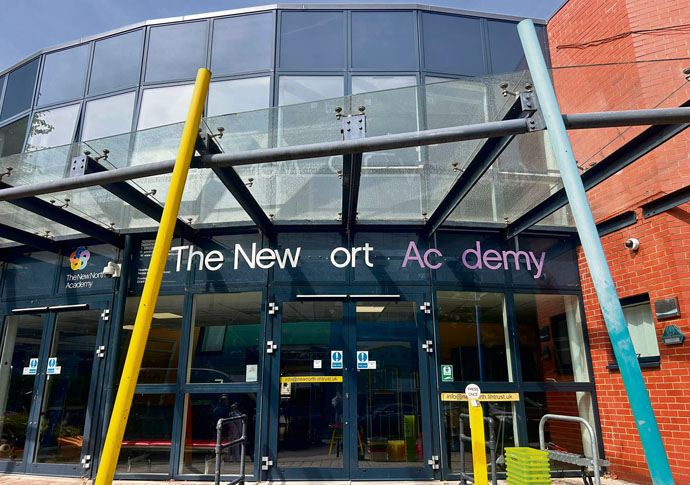
New North Academy (NNA), near Essex Road, announced earlier this year that it would be closing at the end of the summer term
THE over-commodification of schooling is having a catastrophic impact on Islington’s education, a union chief has warned, as another primary school closed its doors for good.
New North Academy (NNA), near Essex Road, announced earlier this year that it would be closing at the end of the summer term, making it the third Islington primary to shut since last year.
NNA applied to the Department of Education to close the school due to declining pupil numbers which it said made it “financially unviable”.
The school was taken on by the Learning in Harmony Trust in 2019, an academy trust which has 13 primary schools within its portfolio.
Terry Sullivan, joint secretary for the National Education Union in Islington, said that Learning in Harmony had taken a “business approach” to the running of NNA. He likened the “expansive” approach of the academy trust to a “game of monopoly”, adding: “Learning in Trust saw New North Academy as a bridgehead into Islington, an opportunity to get more schools under their belt, like an expansion strategy. It’s like they’ve got houses, now they want their hotels.”
Mr Sullivan added that whilst council-run schools are, by law, required to follow democratic processes and consultations in their decision-making, academies can act differently.
Last year, the closure of both St Jude and St Paul’s and Highbury Quadrant schools were met with a backlash and protests from parents who took appeals as far as possible to try and stop the closures.
But when NNA announced its decision to close, Mr Sullivan said parents and teachers had no democratic way to combat it.
Fifty-four per cent of state-funded schools across the country are now academy schools – a process which Mr Sullivan said has been slowly transforming the education system.
“All that taxpayer money that is going into education and schools – rather than improving the schools, they are going into someone’s pay packet,” he said.
“Heads of academy trusts call themselves CEOs. Not teachers, not even headteachers, but CEOs.”
The closure of primary schools is a trend which is being seen across other boroughs in inner London, as declining birth-rates and lower fertility rates are seeing “falling school rolls”, meaning fewer pupils enrolled for school each year. A report by the London Assembly found that “serious financial and practical barriers” in housing and childcare costs were forcing many Londoners away from the city. This was, in turn, having a stark impact on the number of pupils enrolling in schools.
Mr Sullivan added: “The closure of schools in Islington, whether by falling rolls or because of the academy system, most greatly affects the most disadvantaged pupils and children within the borough.”
A recent report by the BBC found that Islington had the lowest fertility rate in the entire city.
A spokesperson for the Trust said “This was a very difficult decision and one that was not taken lightly. Like many schools locally and nationally, New North Academy has been affected by a sustained decline in pupil numbers due to population changes. As all state-funded schools — whether academies or maintained schools — are funded by the government based on the number of pupils on roll, this had a significant impact on the school’s long-term financial viability.In partnership with the Department for Education, Islington Council and other partners, a range of options were explored to keep the school open.
“Despite significant steps to reduce the negative impacts of low pupil numbers, it was not possible to secure a viable future for the school. Our priority throughout has been supporting pupils, families and staff, including helping children secure places at other local schools and working closely with families to ensure a smooth and supportive transition. By enabling pupils to take up available places at nearby schools, the closure also helps to strengthen and sustain other schools across the local community, supporting them to provide pupils with the full range of opportunities they deserve.”
