‘Police put out its AI picture of what Alex may look like now, but how hard are they trying?’
Family hits out at Met over its 18-year search
Friday, 28th August — By Finn Logue
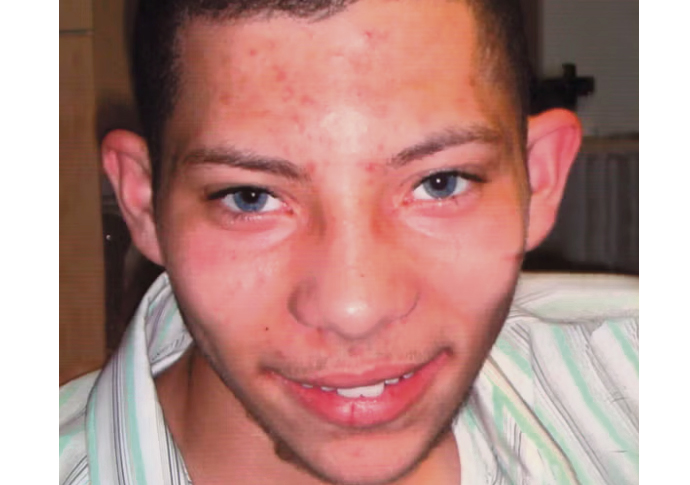
Alex Sloley in the 2000s
THE family of one of London’s most high-profile missing person cases has criticised the police efforts to find him over a near two-decade search.
Finsbury Park teenager Alex Sloley went missing on his way home from a friend’s house in August 2008 – just two days before his 17th birthday.
It has fallen into the cold case files with detectives needing a new lead, although last month they posted a £20,000 reward for critical information about Alex’s whereabouts.
The Met has shared an AI image of how he may look now, a growing trend; earlier this month officers also released a tech-made picture of what Suzanne Lawrence could look like in her 60s – the teenager who went missing in Highbury in 1979.
Amazingly, Nerissa Tivy, Alex’s mother, said the family had not been informed of the new appeal before being told about it by TV producers. She said communication from officers working on the case was infrequent and lacklustre.
Alex’s sister, Lattina Da’Costa, added that she felt the latest police appeal was typical of their superficial action on the case.
She said: “I think their [Metropolitan Police’s] approach, with this appeal and others, is performative. They’re trying to make themselves look good in this situation.
“But you have to remember they are a racist institution and I don’t think that they value the lives of black children, particularly boys.”
The capital’s police force was declared “institutionally racist” in a report by Baroness Louise Casey in 2023 – a root and branch review which followed the murder of Sarah Everard in south London by a serving officer. The Met has also had to respond to claims of rife misogyny and homophobia.
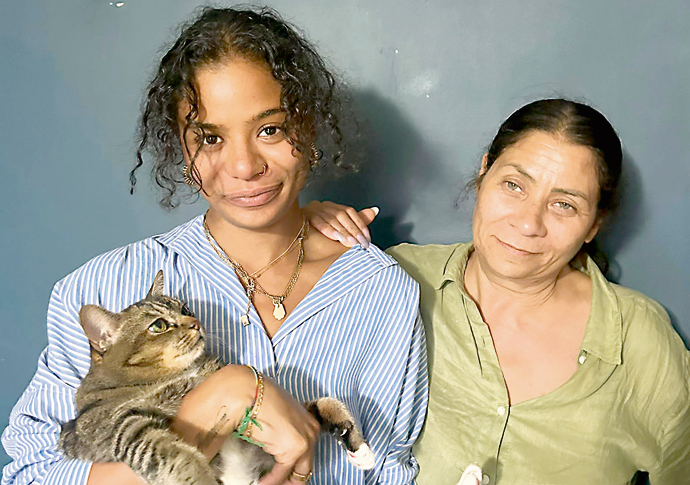
Alex’s sister Lattina Da’Costa and mother Nerissa Tivy this week
The report was a general finding about the force and not about any single individual. The Tribune gave the Met a full opportunity for a right to reply to the way Alex’s relatives said they were feeling.
Ms Tivy and her three daughters had been booked in to speak about Alex on ITV News two weeks ago, and were only informed of the fresh appeal by a TV producer, just an hour before they went on air.
Speaking to the Tribune, his mother said: “They’d pushed out this new appeal, and they hadn’t even told us. They still haven’t even made direct contact with us about it.
“We found out an hour before we went on air, an hour before the public did. We were so embarrassed.”
The family has spent almost two decades campaigning publicly about Alex’s disappearance.
Ms Da’Costa, who is 23, has spent much of her adult life demanding answers to questions around the case, using platforms like TikTok to renew awareness.
Ms Da’Costa added: “I don’t want to toot my own horn, but if it wasn’t for what I was posting online with regards to Alex’s case, the police would’ve forgotten about his case a long time ago.”
Ms Tivy added that she had been forced to “demand” more attention from the police after Covid, as she felt their interest in the case had cooled off.
She said that, even now, she only meets with a specialist officer once every six months to discuss any potential developments.
In the end, she said she felt the police had been “useless” in their handling of Alex’s case, adding: “It took two years and three months for them to even register Alex as missing and come here to speak to us.
“There is so much in that time that could’ve been found or lost, and that was a terrible start.”
According to charity Missing People, 16 per cent of missing children are black, disproportionately higher than the population amount, which is 6 per cent.
Ms Da’Costa added: “What’s important about keeping Alex’s case prevalent is the fact that it opens up this discourse and conversation of ‘why do black children go missing more?’ and ‘why are they disproportionately not found?’”
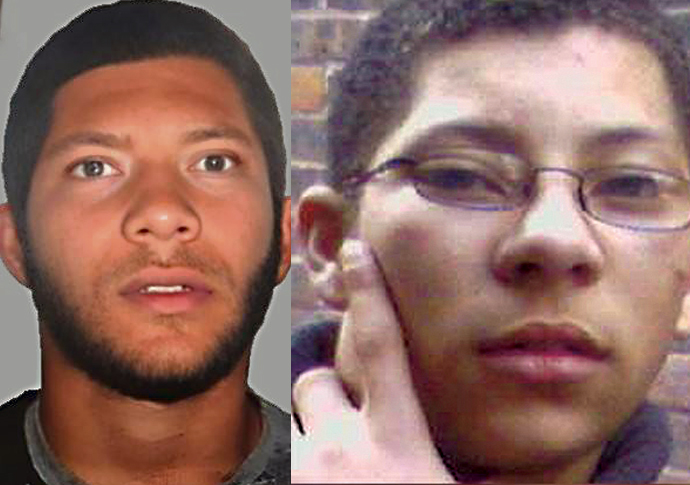
A police image of what the missing man could look like in his 30s and, right, Alex as a teenager
She added: “There’s so many public discussions and theories that I see discussed about my brother’s case, the most prevalent of which being that he was groomed by gangs.
“So if that is the case, and a child was being exploited, then the police neglected that and neglected their care towards him as a child. If the authorities were aware of it, then why was there no kind of enforcement or authoritative role that tried to help that?
“Why was there nothing to help? And why is it only now, 18 years later, that people are learning about it?”
Ms Tivy said that from day one of the search, the Met’s approach had felt heavy-handed and clunky, and the family’s concerns were not investigated or taken seriously.
When she first went to the police to put out a ‘have you seen’ information appeal, she said that her requests were denied, despite Alex being a child.
“They assigned us a black officer because they said they would be able to relate with us better and then went through our whole family tree for 16 hours,” she added.
Ms Tivy described Alex as a “cheeky” young man who loved to “have a laugh and a giggle”.
He had been a student at Grafton primary and the Arts and Media schools, and was a big Arsenal fan.
He had visited the Town Hall in 2004 to celebrate the Gunnners’ “Invincibles” Premier League win.
Ms Tivy and her family are being supported by charity Missing People.
DCI Sarb Kaur said: “I fully understand the pain and frustration felt by Alex’s family and we remain committed to finding out what happened to him.
“This remains an active investigation with an established team who are continuing to look at how we can apply modern policing tactics to this case.
“Since Alex’s disappearance, a Local Missing Hub in each area of London has been launched to improve how we manage missing persons investigations across the capital- ensuring greater coordination, consistency and support for families.
“We continue to urge anyone with information, no matter how small to come forward.”
Anyone who has any information can contact the investigation team directly, via phone or text message on 07860 369 603. Alternatively, details can be provided via 101 or submitted online. Information can also be provided anonymously to independent charity Crimestoppers on 0800 555 111.
• DETECTIVE Chief Inspector Sarb Kaur said in the new appeal released to newspapers on August 13: “Over the years following the appeals we have made, our officers have reviewed hundreds of reports from people who believe they’ve seen Alex in London. Unfortunately, this information is yet to provide investigating officers with the information needed to find him.
“Alongside this appeal, we are continuing to put Alex’s image out there, both at the time he went missing and how he may look now at the age of 34, in case anyone has seen him and can contact us.
“We remain committed to this investigation which I believe can be solved. If you are sitting on information, please do the right thing and contact us.”
