Pubs are a changin’: folk club faces eviction
Brewhouse plans to swap function space with short lets
Friday, 9th January — By Daisy Clague

House band players from left: Nick Moran (clarinet), Simon Hindley (guitar), Roger Trevitt (mandolin), Rob Twisse (mouth organ), Syd Pochin (melodeon), and Alex Szyszkowski (melodeon)
UPSTAIRS in a pub at Highbury Corner, folk enthusiasts fill the long, rectangular function room every Thursday night to hear fiddlers, cellists and singers perform the music they all love.
But the Islington Folk Club could soon be searching for somewhere new to meet after plans were submitted to Islington Council to remove the function room at the Brewhouse & Kitchen.
The musicians have been there since 2021, but planners have been asked to approve proposals to turn their stage into new short let rooms.
“There is this thing called the curse of Islington Folk Club – all three venues we have been in this century aren’t pubs any more,” said treasurer Nick Moran, who lives in Finsbury Park and plays clarinet in the club’s house band.
“This planning application was a bit of a bolt from the blue – it will have a significant impact on us as a club.”
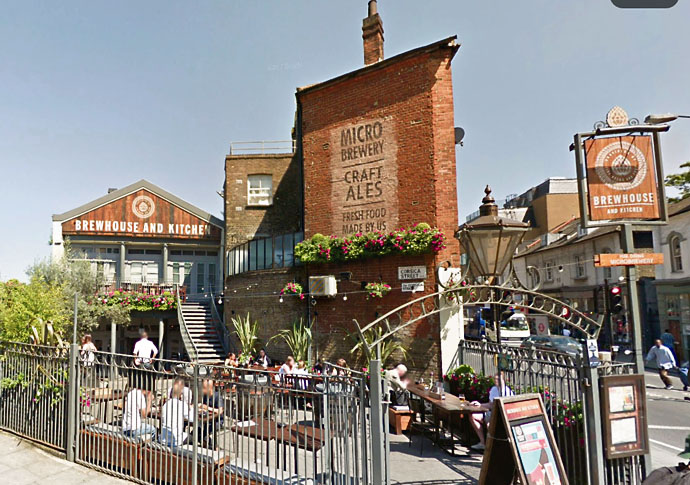
The Brewhouse & Kitchen
Brewhouse & Kitchen’s director Simon Bunn – whose micro-brewery chain has more than 20 branches nationally, including one in Angel – submitted the request for planning permission in November. If approved, the function room and office space will be transformed into eight rooms-for-let, complete with keycard access, kitchenettes and mezzanine bedrooms.
Council officers are reviewing the details, but in its application the pub states it aims to start building work in May.
Mr Moran told the Tribune: “It’s increasingly difficult to find a good venue. Many pubs feel the need to serve food to get by, so a lot of general purpose function rooms have been turned into dining rooms.
“Most of the pub chains I’ve talked to say they see very little value in sustainable local community business. They just see the numbers, they don’t see it as important to have the community coming in or having regulars or anything.
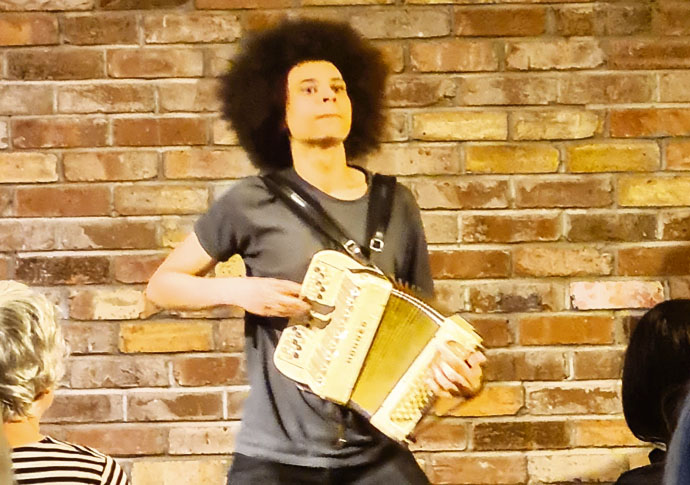
Cohen Braithwaite-Kilcoyne at Brewhouse
“So maybe we’ll find a room that is as accessible and accommodating, but I’d be very surprised.”
Despite Brewhouse being a chain, Islington Folk Club has always had a good relationship with its local managers, who give the space for free on the understanding that the club brings in regular business.
This consistency is important – there is already a roster of professional acts lined up for the year ahead, “from the fiercely traditional to the frankly eccentric”.
Islington Folk Club’s weekly events draw an average crowd of around 50 people, and include music by the house band and open mic slots for amateur musicians.
By keeping ticket prices and running costs low, the club can pay its acts 95 per cent of what it takes on the door – up to £500 on a good night.
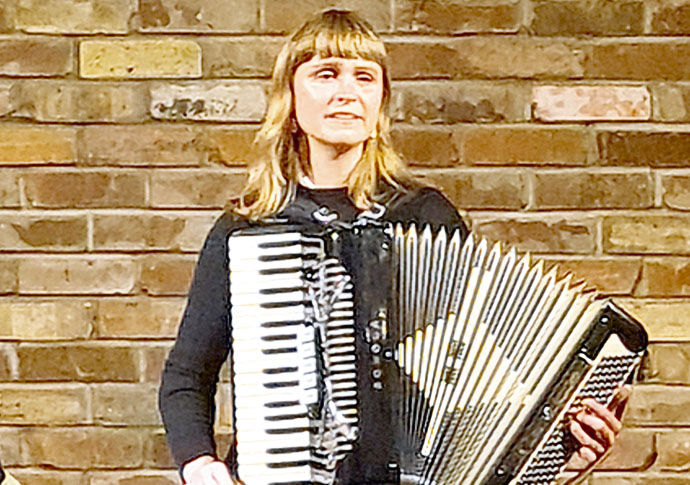
Singer and accordion player Clementine Lovell
“It’s still a scarily small amount of money for somebody who dedicates their life to music, but it’s a great deal more than most other small venues are paying,” said Mr Moran.
“It’s a wonderfully non-judgmental, supportive community and I think it’s important for a lot of people. I’m pretty sure I’m not the only one who has found comfort and solace within the community of Islington Folk Club in hard times.”
Brewhouse did not respond to the Tribune’s request to comment, but its planning documents said: “The proposed conversion of the first floor at Brewhouse & Kitchen represents a sustainable reuse of existing space, contributing positively to the site’s longterm viability and the local economy.
“The change of use from ancillary pub functions to letting accommodation represents a sustainable reuse of underutilised space. The proposed use supports the ongoing viability of the host public house by diversifying income and contributing to local tourism and visitor accommodation within the borough.”
