Tate boss Sir Nicholas Serota objects to ‘overdevelopment' at former family home in Hampstead
Friday, 26th February 2016
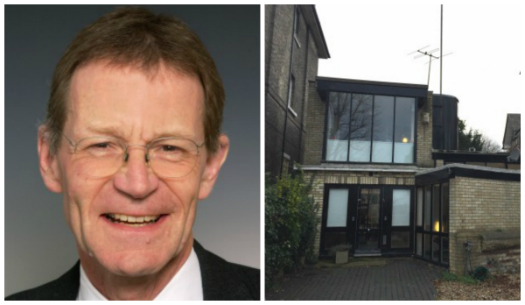
ONE of the art world’s most influential figures has helped stop the demolition of his family’s old home in Hampstead.
Sir Nicholas Serota, director of the Tate Gallery, appealed to Camden Council for the house in Lyndhurst Terrace, once owned by his parents, to be protected from a redevelopment project.
Its new owners want to remodel the £2.9million property by updating its appearance, installing a terrace and digging out a new basement.
Council planners this week refused to grant planning permission for the changes, ruling that the plans would harm the local conservation area and put a mature horse chestnut tree in a neighbouring garden at risk.
The applicants, believed to be a successful entrepreneur and his wife, must now decide whether there are grounds to appeal to a planning inspector to overturn the decision.
Sir Nicholas, who has been chairman of the Turner Prize jury, said he had “known the site for 60 years”, adding: “The tree is said to be decaying but I am not aware of significant deterioration in recent years. In any event, the basement comes close to neighbouring properties and could be regarded as overdevelopment as it would in Kensington, where such major excavations beneath and between existing houses are not now tolerated.”
His sister, Judith Serota, also made an official objection to plans for the house, formerly owned by Baroness Serota, who was a member of the old Hampstead Borough Council and later a minister in Harold Wilson’s 1970s Labour government.
“The proposed plans are detrimental to the conservation area, intrusive to neighbours and, given the huge increase in floor area, simply greedy,” said Ms Serota, adding that the property’s garden had won prizes in the past for its beauty.
Baroness Serota died in 2002, and the house, designed by Hampstead architect Ted Levy, was sold after the death of her husband Stanley two years later.
Camden also received objections to the plans from current neighbours, the Thurlow Road Neighbourhood Association and the Heath and Hampstead Society.
But offering a contrary view, barrister Michael Sternberg QC, who lives nearby, questioned why such importance was being reserved for a house which he said was wrongly described as an old coach-house, and a rotting tree.
In paperwork filed at the Town Hall, the new owners’ architect, Richard Mitzman, said: “We propose to keep the building modest in scale with a very similar roof profile to the existing house.” He adds that the “building will be a quiet contemporary building that still blends into the street both in materials and bulk”.
But a refusal decision, signed off by Camden’s director of environment Rachel Stopard, said that the demolition “would cause harm to the character and appearance of the conservation area” and that excavation work would harm the root protection area of the mature chestnut tree.
QC backs proposals with colourful critique of current house
BARRISTER Michael Sternberg QC filed a colourful letter of support for the redevelopment plans, questioning the real significance of the architecture.
“The existing house is a depressing and poorly finished property,” he said in a letter to planners. “It is a rotten and embarrassing example of the work of Ted Levy. It is amusingly called an Old Coach House by some when it fact at the time it was built travel by horse-drawn coaches had ended in London many decades earlier.” And of the horse chestnut tree, he added: “The tree itself sadly resembles one appearing in pictures of no man’s land in the Great War which has been subject to gunfire. It is a sad eyesore in any event.”
Mr Sternberg QC, who lives nearby and often walks past the house, said: “The proposed development will sit comfortably in the existing site and is attractive and far more sympathetic to the conservation area.”
