‘She was manipulated by an algorithm and it pushed her to her death’
Marc Silver says his film about 14-year-old Molly Russell, who took her own life after viewing images of self-harm, aims to make a cultural shift. Dan Carrier talks to him
Friday, 6th March — By Dan Carrier

Molly Russell
AN unchecked thirst for profit, and no responsibility for the damage your product may be doing – a dystopian reality that Silicon Valley tech firms have enjoyed for 30 years.
Now, a new film, Molly Vs the Machines, by Highgate Newtown-based director Marc Silver, unpicks a debate over the internet, social media and access.
He considers how we regulate an intrusive and possibly dangerous product: as with smoking and the oil industry, it took time for legislators to catch up with the damage these products do.
Today, there is a similar battleground over social media use.
Molly Russell was 14 when she took her own life. An inquest revealed she had viewed thousands of images relating to self-harm on Instagram in the months leading up to the tragedy.
From a teenager’s bedroom to the boardrooms of Silicon Valley, Molly Vs the Machines tells of her father’s quest to uncover the truth behind his daughter’s death – and hold those responsible to account.
Marc saw how what happened to Molly Russell had similarities to the Cambridge Analytica scandal. He had worked with Archway-based journalist Carole Cadwalladr, who considered how Cambridge Analytica had harvested people’s Facebook profiles without their consent and used that information to help Donald Trump in the 2016 Presidential election campaign. Cambridge Analytica were accused of doing the same during the Brexit referendum.
Former Analytica staffer Christopher Wylie went public on data misuse, and speaking to Christopher revealed important truths Marc was keen to explore.
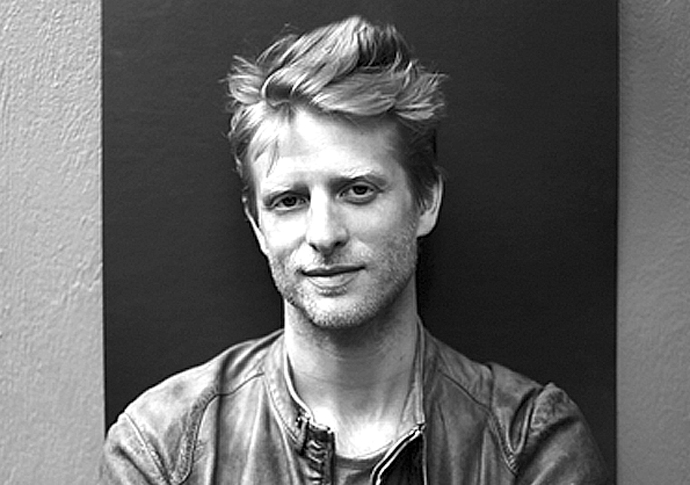
Marc Silver
To make Molly Vs the Machines, Marc collaborated with Harvard academic Shoshana Zubroff, the author of The Age of Surveillance Capitalism. She described this age as one of a new “fundamentally anti-democratic new economic logic,” created by a new strain of virulent capitalism, which owns and operates the internet and acts without safety checks or regulation.
“When I first read Molly’s story, it was about a year before her inquest, and I read it through the lens of these other events. Just as Cambridge Analytica used data to manipulate people’s behaviour, I could see that was the same with Molly. She was manipulated by an algorithm and it pushed her to her death. It was not as if Molly’s story was caused by a glitch in the system.”
As a film-maker with a wider point to illustrate through this very personal story, Marc had a careful balance to find. “We did not want to just tell Molly’s story, we wanted to have an impact and shift a culture,” he says.
Marc recalls how the coroner, Andrew Walker, was key in untangling what had happened. The family’s legal team showed 2,100 images of self-harm and suicide that Instagram allowed Molly to access in the six months before her death.
Internet giant Meta’s head of health and well-being Elizabeth Lagone – “an Orwellian-sounding title indeed,” adds Marc – was cross-examined.
Lagone explained to the coroner’s court how coding was based on suggesting content that would increase the user’s engagement. It did not have a safety valve that would distinguish between types of content. Lagone claimed in court that she felt it was “safe” for children to see the disturbing content Molly was exposed to, and even that it could “help people feel less alone”.
“I found it incredible watching Lagone,” he says. “There was this almost cognitive dissonance in what she had been trained to say, and what ‘normal’ people felt and heard when she said those words.”
The coroner would say in his conclusion: “The material viewed by Molly, already suffering with a depressive illness and vulnerable due to her age, affected her mental health in a negative way and contributed to her death in a more than minimal way.
“Molly Rose Russell died from an act of self-harm whilst suffering depression and the negative effects of online content.”
Marc reflects how a seemingly straightforward argument that tech companies should be held responsible for the content they host has been twisted by firms whose profits are based on an unfettered on-line wild west.
“Big tech claims Europe is seeking to censor free speech by regulating social media,” he says. “That free speech claim has really stayed with me.
“Algorithms send you specific information – that is not free speech, it is targeted, and isn’t balanced. It is solely about keeping you engaged.”
Marc’s film comes at a prescient time. There is a movement to limit the access young people have to the internet, be it through parental control or through legislation, as we saw in Australia, which has banned social media for the under-16s.
Molly Vs the Machines has led Marc to consider solutions.
“To ban or not to ban? That is being discussed across Europe. But there is also a massive question going on about how we build our own tech infrastructure outside Silicon Valley. We cannot be reliant on US tech.”
He has a common sense approach to the topic of age limits. “We should be shifting the onus from banning children and on to the creators. If we are talking about banning, I would rather not ban the victims, the young people – we should be banning the producers of this content,” he says. “We should consider it like a product recall. Take it off the market, prove that it is safe, and then children can use it.”
The film offers a new take on AI. “We need to be creating new versions not embedded with the ideology and values of Silicon Valley,” he says.
Marc has teamed up with Angel Maldonado, a tech designer who runs Empathy AI.
Mr Maldonado’s company is building an AI system that is not on Silicon Valley clouds and is privacy-based.
“It does not extract any data from you and you control the data that goes in. You can therefore trust the knowledge that comes out,” says Marc. “It is about using AI in a trustworthy way, with human empowerment.”
The film has a website that is enclosed. If you ask the website’s generative AI system a question, instead of trawling across the entire web for answers, it will only draw on information built into the webpage.
“I think this is the future. The creator keeps control of the content and the audience can trust it, based on the relationship they have with the creator.”
• For more details visit mollyvsthemachines.com
