Squatters: We demand to see school plans
‘Crews’ occupy primary closed last summer over lack of pupils
Tuesday, 7th April — By Isabel Loubser
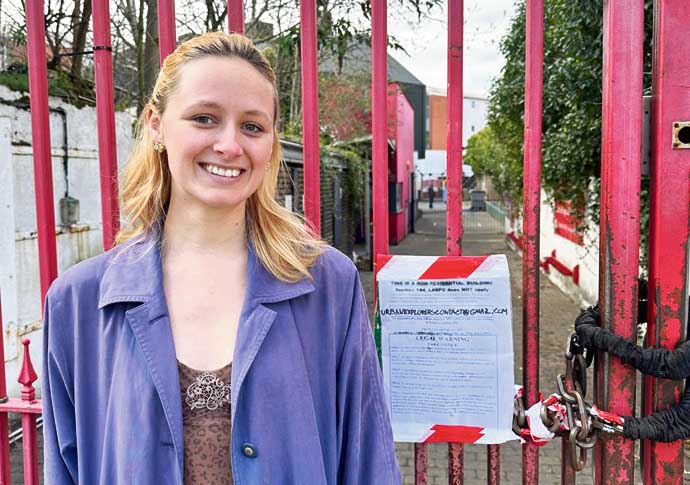
Molly Jade Davey is among the group of 20 squatters who set up camp at the closed St Jude and St Paul’s Primary School in Mildmay about a month ago
SQUATTERS who have occupied a former primary school have say they will leave once the owners can provide proof of a plan for the building.
The group of 20 people “without stable housing” set up camp at St Jude and St Paul’s school in Mildmay about a month ago, after finding the campus abandoned.
The primary was closed by the council last summer due to a lack of pupils, but owners say the grounds are set to be transformed into a learning facility for adults with special educational needs in September.
The Church of England school is owned by the London Diocesan Board for Schools (LDBS), and the Tribune understands that contracts have been signed. But despite complaints that the new residents are holding up planned building works, the landlords have yet to serve an eviction notice to the squatters, who could wait for a court order before abandoning the building.
Molly Jade Davey, who is part of the Agora group, told the Tribune: “There is a plan, but usually those things take a few years to come about.” She said that if they see that something is really happening in September then they would move out. But otherwise they would see it as just an excuse for them to be kicked out.
The group have transformed classrooms into bedrooms and studio spaces, storing their clothes in supplies cupboards, and putting toys and tennis rackets to the side.
The gymnasium is used as a space for meetings, and the dining hall is where they come together to share meals.
The group have been formed by two separate “crews”, with members ranging from age 25 to their 70s.
Ms Jade Davey said that she had been squatting since last July, and had previously occupied a pub in Archway and an abandoned sexual health clinic in Holloway Road.
She added: “We like to be transparent and be able to hold accountability for what we do. We’re not ashamed of squatting. We are trying to use vacant spaces, because some really do remain vacant for years and years.
“Sometimes they remain vacant strategically. Sometimes landlords buy up loads of different properties and leave them vacant for long enough to be able to then turn them into housing without having to meet council housing requirements – that’s not cool either when there’s a housing crisis.”
LDBS has previously said that the squatters were “jeopardising this provision for individuals and families who will benefit from it the most”, but Ms Jade Davey said: “At the moment, it’s vacant, we’re not jeopardising anything. We are quite content that when the building has a purpose, we are very content in giving the building back.”
She told the Tribune: “As a crew, we are very, very strict with everyone. Everyone knows that you do not harm the building, the building has to remain like it was when we got there, or as close as possible.”
The group, which is mainly made up of artists, also help vulnerable people who are struggling with housing, and have two members who are in their 60s and 70s.
They intend to open the space up to the community, organising artistic activities and practical workshops.
They are “definitely not naive enough” to think they won’t get kicked out, Ms Jade Daey said, adding: “We’re always a bit worried, especially when you start building something nice together, it’s always a big worry because this can always be taken away from us.
“And then it takes time, because you’ve got to find another building, move everything, and then get settled in again. It just takes time. The less time you have in a space, the less you can be constructive to the outside. It does take time to build up relations with the community.”
A spokesperson for LDBS said: “Whilst we are very sympathetic to the situation of homeless people in London, we continue to invite the squatters to give up possession peacefully.
“However, we also have a legal responsibility to respond to the significant number of complaints that we have had from local residents.”
