‘There needs to be a lot more awareness that we are part of the story – they can’t leave us out’
Angela Cobbinah talks to pioneering publisher Margaret Busby about her battle to give black writers a platform
Thursday, 11th June — By Angela Cobbinah
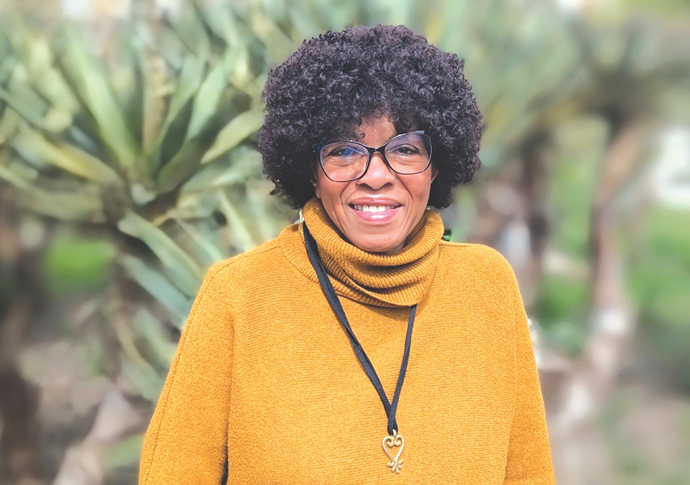
Margaret Busby [Angela Cobbinah]
THE story of a former black CIA agent who uses his inside knowledge to subvert the US establishment just couldn’t find anyone willing to publish it until a young woman came along and helped turn The Spook who Sat by the Door into a best-selling novel.
It was 1969 and she was university graduate Margaret Busby, one half of Allison & Busby, a publishing company no one had ever heard of on the look-out for its first big break.
“Sam Greenlee had written this political thriller and we immediately saw its potential,” Margaret begins. “I lent him £50 so that he could stay in London while I worked with him on the manuscript. The whole thing was produced on a shoestring budget – I even designed the book jacket myself using Letraset.
“We sent it to the Observer to serialise and they said, words to the effect, we don’t publish fiction especially not black power fiction. We said you’re wrong and, amazingly, they capitulated and published extracts in their colour magazine.”
The boldness, or perhaps naivety, of youth paid off. Spook would go on to be published on both sides of the Atlantic, translated into several languages and made into a movie scored by Herbie Hancock that remains a cult classic.
For 20 years, Allison & Busby thrived on promoting the offbeat (Camden councillor Peggy Duff), the unknown (sci-fi writer Michael Moorcock) and downright ignored (19th-century African American author Harriet E Wilson), while Margaret herself has gone down in history as Britain’s first black female publisher, one who has continued to make waves in a more than five-decade career, not least with the 1991 landmark Daughters of Africa and its sequel 30 years later, New Daughters of Africa, anthologies of writing of women of African descent that she put together as a literary first.
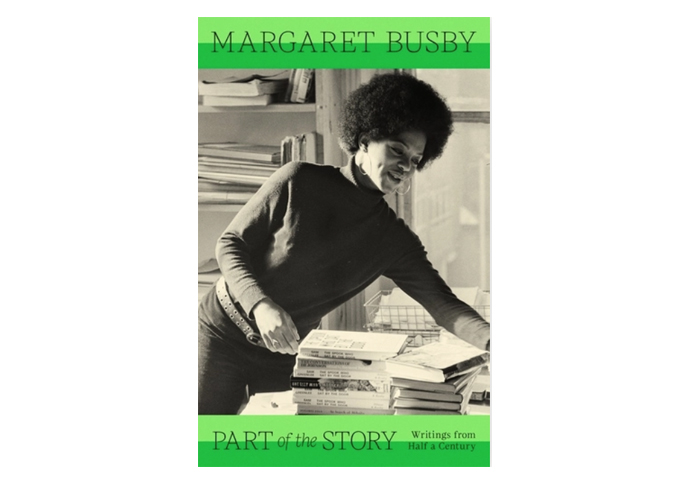
How Margaret went from being a dreamy teenager with a love of books to literary royalty with her image on the walls of the National Portrait Gallery is told in Part of the Story, a selection of her own writings from the 1960s to 2020s representing her “ongoing engagement” with the written word and a passion to make a positive contribution to literature. Above all, she wants to “pass it on” to the younger generation: “They haven’t been through what you and I have so unless you pass your knowledge on they are missing out on history. That is the reward, sharing something.”
We’re chatting over hot chocolate near her home in Clerkenwell on the eve of a nationwide publicity tour. It’s one of those rare sunny mornings in an otherwise bleak run of weather and she’s looking relaxed and resplendent in a loose orange jumper, carrying a bemused air of what’s all the fuss about?
Our conversation turns to her early years in Ghana where she was one of three children born to a Trinidadian doctor and a Ghanaian midwife. Margaret’s sense of herself as an African came when she was packed off to boarding school in Sussex with her sister to receive a thoroughly English education, rounded off with a degree in English literature at Bedford College, University of London.
Happily steeped in the works of Shakespeare, Milton and Chaucer, she was nonetheless aware of a gaping hole in what she had been taught.
“Nothing in my British school or university curriculum brought me into contact with a single book by a writer of colour. As far as the syllabus was concerned there were none,” she recalls ruefully. “It amounted to an erasure of my identity, absolutely no acknowledgement of how my presence and history connected with everything I had been taught over the years.”
Blessed with the gift of curiosity, she would restlessly trawl through the secondhand bookshops in Charing Cross Road in an effort to find the missing pieces of the jigsaw.
Then two lightbulb moments occurred. Her discovery of Heinemann African Writers Series where she first read the likes of Chinua Achebe and Flora Nwapo, and a photograph of South African-born editor and writer Noni Jabavu gracing the cover of a popular London literary magazine.
“Seeing her, an African woman, as part of the literary scene was almost giving me permission that I could be part of it, too. If you don’t see anything else, you may think that this is a space you’re not meant to be in. Again, that’s why I do what I do, showing what’s possible.”
Margaret already had vague writerly aspirations. She enjoyed writing poetry and as an undergraduate had edited the college literary magazine. So, when she bumped into Clive Allison, a young man with similar aspirations at a party, it did not take them long to come up with the idea of going into publishing.
Among the authors she championed as editorial director was Buchi Emecheta, a 20-something Nigerian whose two semi-autobiographical novels portraying her life as a single parent in the Queen’s Crescent area of Camden saw her appear on the list of Granta magazine’s Best of Young British Novelists in 1983 alongside William Boyd and Pat Barker.
“In the same way Alice Walker and Tony Morrison wanted to write books they wanted to read, I wanted to publish books that reflected characters and situations I could identify with,” she tells me. “Second Class Citizen and In the Ditch are narratives that nobody had been able to tell until Buchi came along and she was able to enrich literature with her story. That’s why I wanted to help that happen.”
Part of the Story comprises writings from her many years as a freelance journalist, beginning with Skin Deep, a 1966 piece in the New Statesman in which “the girl from Ghana” – how the press described her back then – navigates a world where her presence is always unexpected. Elegantly written and full of wry observations and sharp commentary, the collection charts a lifetime of encounters, experiences and opinions. You come away feeling that if Margaret hadn’t been so busy publishing other people’s novels, she would have knocked out a few of her own by now.
Since she started out, English literature has been favourably replenished by “cultural gifts from the rest of the world”, she states, also noting positively the black-run publishing houses that have followed in her wake to challenge the status quo.
But apart from a blip following the Black Lives Matter protests, when mainstream publishers were suddenly keen to get black authors on board, the fight for space continues.
“In the 1980s publishers were saying ‘oh we’ve already got one black writer’, so you’d think by 2026 we would have got beyond that, but we haven’t.”
One of the problems, she says, is the nature of the workforce, which is overwhelmingly white and uses stereotypical criteria to judge black writers while at the same time hiring “sensitivity readers” in a supposed gesture to diversity.
“The publishing industry needs to reflect the diverse face of society,” she declares leaning forward in her chair for emphasis, echoing the assertion of her role model and favourite author, Toni Morrison, who started out as a senior editor at Random House in the 1960s. “There needs to be a lot more awareness that we are part of a story everywhere. They can’t leave us out.”
• Part of the Story: Writings from Half a Century. By Margaret Busby, Hamish Hamilton, £22
• New Daughters of Africa. Edited by Margaret Busby, Penguin, £22
