Wheelchair funding ‘is a postcode lottery’
Make-up artist crowdfunds to buy lightweight chair
Friday, 4th September — By Amy Reid
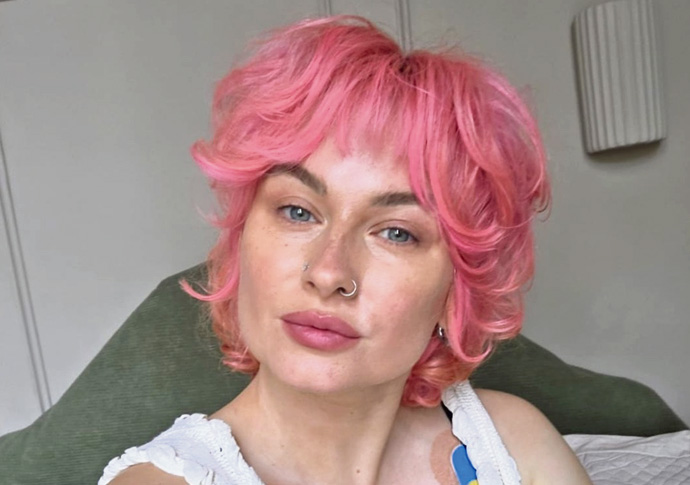
Hayley McCourt began losing mobility after developing a rare neurological condition that leads to increased pressure in the brain
AN Islington woman who has crowdfunded over £4,500 for a lightweight active wheelchair says she fears those without a way to raise funds may slip through the cracks as chair access on the NHS is a “postcode lottery”.
Hayley McCourt, 38, began losing mobility after developing a rare neurological condition that leads to increased pressure in the brain, causing fatigue, dizziness and reduced mobility.
She needs crutches to travel short distances and is unable to use trains or tubes independently. She told the Tribune the physical and mental strain of her illness “100 per cent” puts her off leaving the house.
Idiopathic Intracranial Hypertension (IIH) is a condition where the body is unable to properly drain fluid from the brain, leading to a build-up of pressure inside the skull.
Following surgery to implant a ventriculoperitoneal shunt – a medical device placed in the skull which drains fluid into the stomach – Ms McCourt began using a wheelchair, and continued as her condition worsened and her mobility became even more limited.
Chronic migraines, constant dizziness and falling became part of her daily life and eventually the make-up artist became too unwell to work.
“Before I became unwell, I was completely independent. I had a creative job I loved, I was travelling everywhere all the time, super social. Then I just started getting all these headaches and it just came on like that.”
The chair she originally purchased cost around £300 and weighed 17 kilograms, making it extremely tiring to use without someone pushing.
“It got to a point where I was like, OK, you know what, I’m going to take some control over it. I think I need a bit more help. I can’t just do it with crutches anymore,” she said. “Say if I wanted to go see a friend for coffee, I’d be like, ‘right, I’ve got to rest two days before, two days after’,” she explained.
“I’ve got close people that I have confided in, but my world’s gotten a lot smaller.”
Ms McCourt looked into what chairs could be available on the NHS. She was assessed and was told that, because she still has use of her legs, the only chair available was one barely lighter than the one she already owned.
“It’s a big difference between the bare minimum and actually living your life,” she added.
She was eligible for a grant of £704 toward the cost of a lightweight active chair which would allow much greater independence in getting around. After going to a recommended dealer for a fitting, she was left with a shortfall of around £3,000, and only 60 days to come up with the money before her NHS funding timed out.
After some reluctance, Ms McCourt set up a GoFundMe page and posted on social media about her situation. She hit her original fundraising goal “almost overnight”, which covered the most basic version of the chair.
Any extra donations will go towards add-ons such as a power attachment which means she will not need to self-propel everywhere, allowing her access to nature where ground can be uneven or events held outdoors such as festivals.
“With this wheelchair, I feel like I’m going to be able to actually go out for the day because I’m sitting. If I’m in pain or dizzy, it’s like I can’t fall anywhere,” she said.
“It’s been very weird for me because I started last week crying because I just thought, ‘oh my god, I’m never gonna be able to afford this chair and I’m going to lose the funding from the NHS’. And now I’m crying every day because I’m opening this fundraiser and I’m like, ‘People care? What?’ It’s a weird rollercoaster,” she said.
“People have been so kind that I can actually get the ideal chair which will cover me for many, many, many years,” she added. “Hopefully I won’t ever need to do anything to it. I’ll ride it till the wheels fall off.”
Through talking to other active lightweight chair users, Ms McCourt discovered huge disparities in support available across the country. She told the Tribune many describe the process of applying for help on the NHS as a “postcode lottery”.
“The NHS, they’re amazing, but they’re very limited. They try their best,” she said.
“I’m lucky I have a little network and I have some family and friends that have a bit of disposable income. Other people maybe live in a community where they don’t have that, or they’ve lost touch with family.
“They may be really unwell and typing and sorting all these things and organising and campaigning is a lot. It just makes me think, ‘wow, I’m actually incredibly privileged’.”
