A fresh start – or more of the same? Labour’s elections pain made Sir Keir’s exit ‘inevitable’
In her final piece for the Islington Tribune, assistant editor Isabel Loubser reports on the reaction to the PM’s departure
Friday, 26th June — By Isabel Loubser
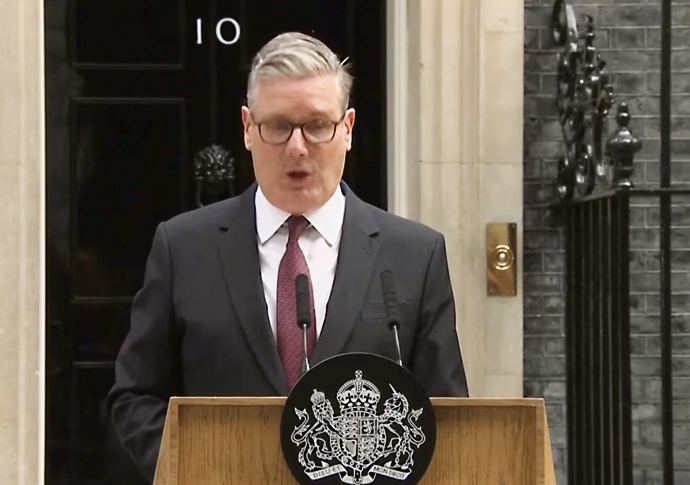
Sir Keir Starmer’s speech on Monday
IT ended with his voice cracking with emotion, a pledge to his children and a hug from his wife.
Then Sir Keir Starmer disappeared back through the doors of No 10.
He had just announced on Monday morning that his time in Downing Street was now limited, after a speech in which he resigned as leader of the Labour Party.
In doing so, he cleared the way for a successor to be installed, either by contest or coronation.
All eyes are now on Andy Burnham, the man Mr Starmer had once supported in a past leadership contest. Friendships are not for ever in the dog-eat-dog world of UK politics.
Mr Starmer’s speech came just 46 days after the council elections, which saw his party suffer significant losses to both the Reform and, in London, to the Greens.
While Islington did not fall to Zack Polanski’s party like neighbouring Hackney, Labour’s dominating majority suffered a big dent here and several long-serving councillors – including cabinet members – lost their seats.
Many of those who did said their departures should act as a “wake-up call” to the government, even if public criticism of Mr Starmer was rare.
Labour has a large membership in Islington with diverse views about his performance, but even some of those who have supported Mr Starmer at every turn had begun to worry that he would not be able to reverse unpopular personal poll ratings.
There was a shudder when Mr Starmer insisted he would stand in a leadership contest if Mr Burnham, fresh from his success in last week’s Makerfield by-election, were to challenge him, with the prospect of a destructive internal battle.
The toughest critics said it was another example of him changing his position when he said the opposite on Monday.
“I know the question being asked now is not who was best placed to change the Labour Party, to take us into power, and to begin the vital work of improving lives for millions of people,” he said.
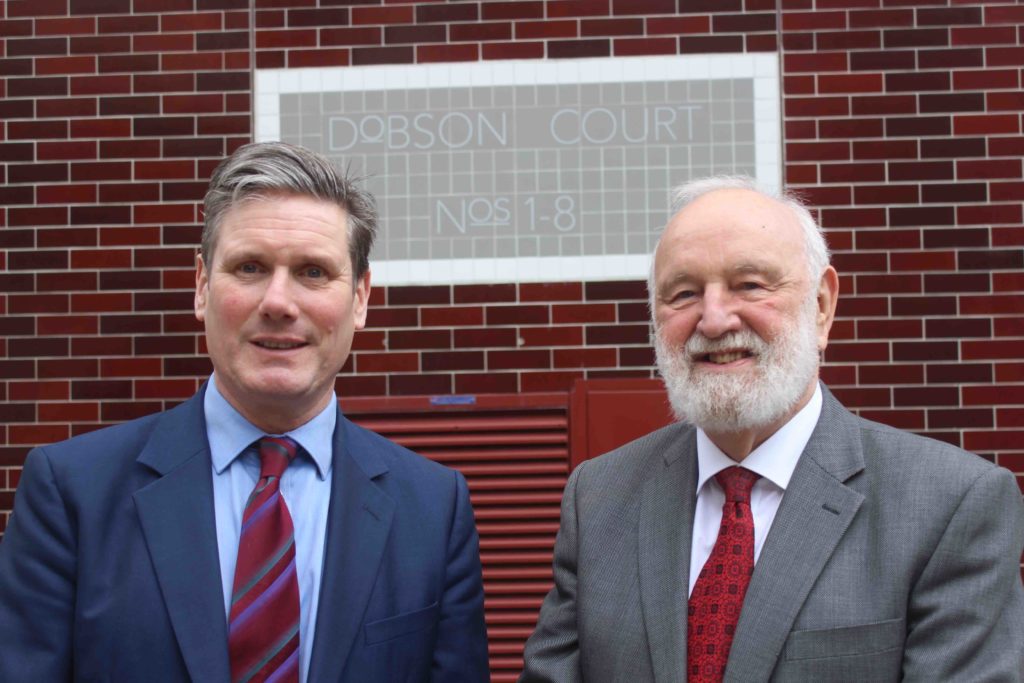
Sir Keir Starmer with his predecessor Frank Dobson in the Holborn and St Pancras constituency
“Those questions have been answered. The question my party is asking now is whether I am best placed to lead us into the next general election. I have heard the answer of my parliamentary party to that question. And I accept that answer with good grace.”
In Islington, the list of private concerns about the party’s direction under Mr Starmer have included scrapping of the winter fuel payments, a delay on lifting the two-child benefit cap, and the Peter Mandelson scandal.
Gary Heather, who spent more than a decade as a Labour councillor before stepping down prior to May’s council elections, said this week that he felt the prime minister had let himself be controlled by other figures in the party – like Morgan McSweeney – and this had alienated loyal members and voters. “Keir Starmer has some capability”, he said.
“But he has been ruled by them and that’s been his undoing. The trouble is these people still run the Labour party, unconditionally, they do what they like.
“What they never realised is that they wouldn’t be able to pull on the electorate what they pull on the party.”
Meanwhile, Jenny Kay, who also sat in the Town Hall for ten years before losing her seat in May, said that “change had been needed for a while”, adding: “It’s a shame it took a local election result to finally force the issue”.
She told the Tribune, that Andy Burnham – who is all but certain to become the seventh British prime minister in ten years now “has the opportunity to reunite the Labour Party as a broad church and build a genuine centre-left coalition.”
Ms Kay said: “People need to feel their government is on their side, standing up to powerful interests and improving everyday life in tangible, visible ways.
“Get that right and we give ourselves a fighting chance of preventing a far-right government in a few years time”, she said.
Many councillors from north London headed north to support Mr Burnham’s campaign to win the Makerfield by-election – knowing that if the now former Mayor of Greater Manchester won, he would next make his move on Mr Starmer’s job.
Several councillors told the Tribune that Mr Burnham’s arrival was a chance to restore hope to the party, and provide a fresh start.
“I think if people want to run with him to be the leader, let’s try that”, said Mr Heather.
He warned, however, that Labour members should not “get carried away”, adding: “Some of the things he has said, like returning water to public ownership, I like. But Keir Starmer said the same things.
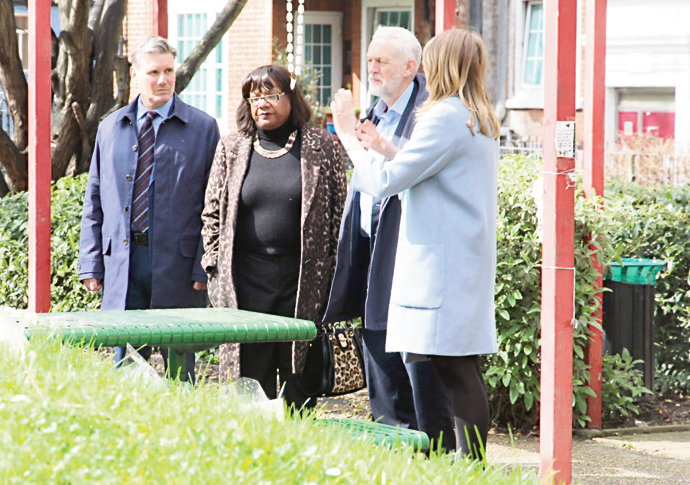
Mr Starmer visiting the scene of a stabbing with Diane Abbott during Jeremy Corbyn’s time as leader of the Labour Party
“I want someone who is going to say there aren’t enough resources everywhere and say that we have to do stuff like tax the rich.”
Meanwhile, Dame Emily Thornberry did not want to comment either on Mr Starmer’s resignation or the possibility of Mr Burnham moving into Number 10.
She was sidelined by Mr Starmer after the 2024 general election when it was expected she would be part of the cabinet, possibly as attorney general.
This week, the Islington South and Finsbury MP was in Beirut this week as part of a trip with the Foreign Affairs Committee.
There has been speculation over whether Dame Emily could be offered a cabinet position under Mr Burnham.
After the local election results last month, she said it was “time to stop and think”, adding: If we are losing, national government needs to look and say ‘what have we done wrong?”.
Mr Starmer was accused of deflating the excitement that came with the arrival of a new government in July 2024 by immediately insisting tough times were ahead. Others saw this as “grown up” honesty.
With Chancellor Rachel Reeves, he removed the winter fuel allowance for pensioners, cut back on support for people with disabilities and refused to lift the two-child benefit cap at the first opportunity — regularly cited as the single most powerful measure for tackling child poverty.
The latter was eventually removed, but not before the government had been accused of failing to soothe the cost-of-living crisis for those struggling to get by.
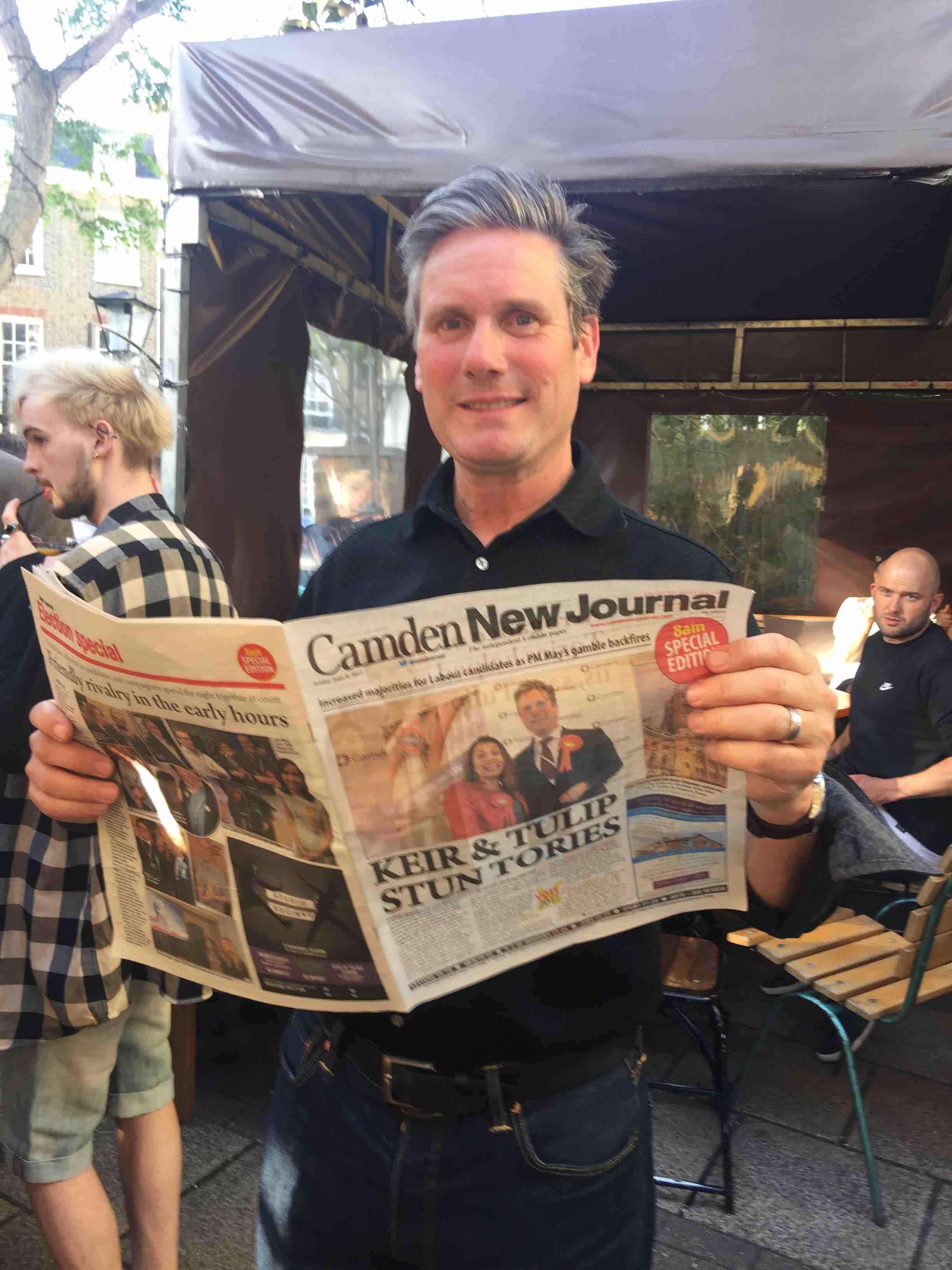
Mr Starmer after the election in 2017
There will be further inquests over how the issues of foreign wars, Gaza, immigration and even personal choices over expenses and freebies were handled when the drafts of history are written and rewritten about why the forensic lawyer who was supposed to end the merry-go-round at Westminster has lasted only two years in the job.
His choice of advisers will probably require a chapter from the biographers too.
A more recent hammer blow was the resignation of John Healey, the Defence Secretary, who stepped down last month insisting the budget was not big enough for the UK to defend itself.
Nevertheless, Mr Starmer insisted in his speech on Monday that he was leaving the country in a better state than he found it, telling the assembled reporters that people’s “wages rose faster than inflation in every single month since we came to power.”
His list went on: “Investment secured, infrastructure being built. An end to austerity, with the fastest fall in NHS waiting lists for 17 years. The biggest improvement in rights for workers and renters in a generation. The biggest uplift in defence spending since the Cold War.
“Small boat crossings falling, asylum hotels closing, protecting young people from social media, and half a million children being lifted out of poverty because of the choices that I made.”
Someone else is leaving…
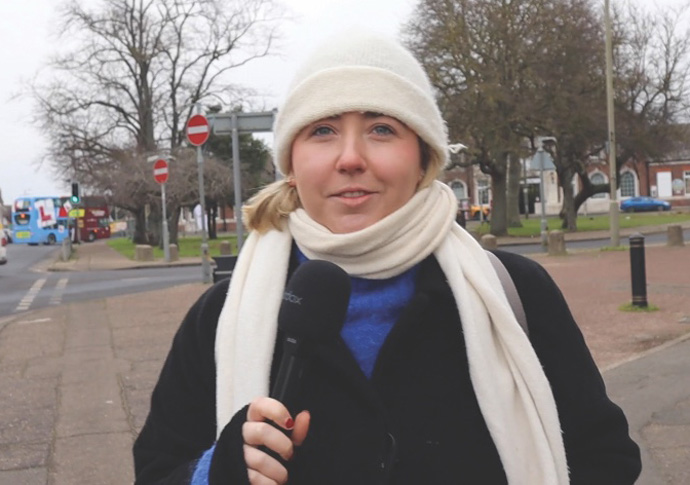
THIS week’s Islington Tribune marks a farewell to our assistant editor Isabel Loubser, who has been leading our political coverage for more than two years.
In journalism, they say that if you aren’t ruffling a few politician feathers, then you aren’t doing it right.
And nobody at the Town Hall – whether they appreciated the scrutiny or not – can say that hasn’t been the case with Isabel’s direct approach to asking questions.
She has fearlessly taken readers behind the scenes of the decision-making which affects residents’ lives but are too often hidden from plain sight.
When they have our councillors have refused to explain themselves or hidden behind a press officer she has reported that too. Now, she is heading to a national job reporting on the political comings and goings in Westminster – so all the MPs, better watch out.
Everybody at Tribune would like to thank Isabel for her hard work on the paper and wish her well for the future.
