‘History belongs to those who write it down – and so much of this stuff wasn’t being written down’
Writer and historian Lloyd Bradley tells Dan Carrier about his latest book – the final part in a trilogy of work about music and culture
Friday, 2nd October — By Dan Carrier
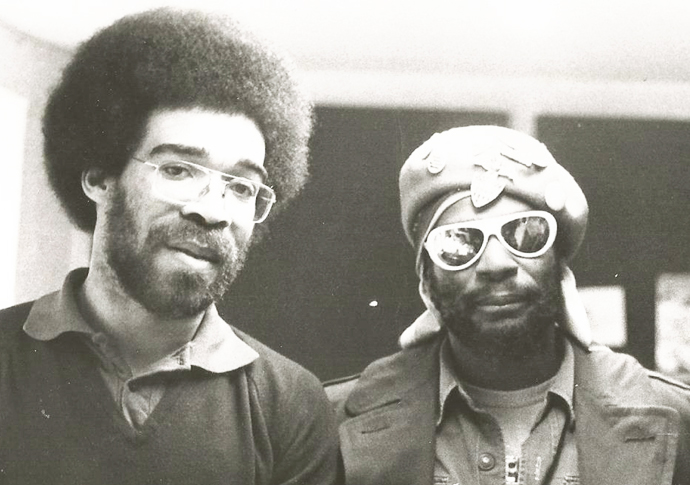
Lloyd Bradley with George Clinton
IT began for Lloyd Bradley in a West End backstreet in 1978. Writer and historian Lloyd has written three seminal books on music and culture: his groundbreaking work offers deep-dive research, and he brilliantly and beautifully unpicks musical movements.
His latest book, Funk Is Its Own Reward, is the final part of a trilogy: Lloyd’s previous works are Bass Culture: When Reggae Was King, and Sounds Like London: 100 Years of Black Music in the Capital.
His writing career began when he was working as a chef with a healthy appetite for music.
He had heard George Clinton was heading to the Blues and Soul magazine offices in Hanway Street, behind Oxford Street. Clinton was due to review some singles for the magazine, and so Lloyd and his friend Chris showed up outside, hoping to meet the musician.
“We were outside, leaning against a wall and George stepped out of a car with his PR man,” he recalls. “We went over and shook his hand and he thought we were from the magazine.
“The guys from Blues and Soul came downstairs – they’d seen the car pull up – and they thought Chris and I were with George.
“We were all ushered upstairs and we spent the afternoon reviewing singles.”
Once finished, everyone trooped back downstairs and George got into a car and went off.
“I remember the editor, Bob Kilbourn, wondering why we weren’t going with him,” says Lloyd.
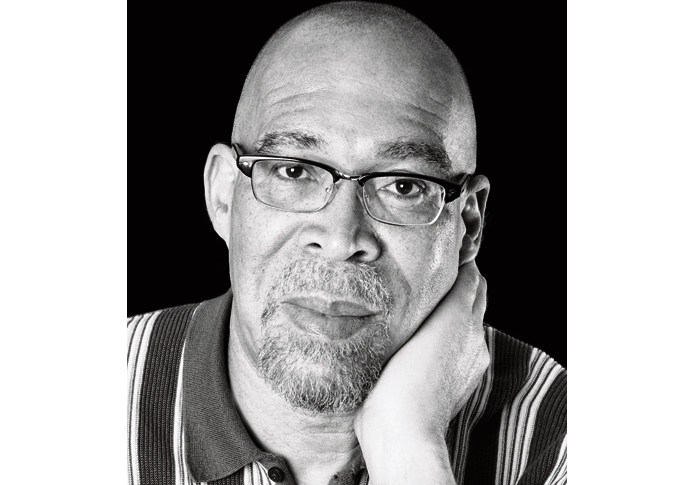
Lloyd Bradley
“I admitted we had just met him and Bob thought it was hilarious. George invited us to a gig he was doing the following day and Bob said to me, ‘If you pick up any news, tell me.’”
It led to Bob asking Lloyd if he’d like to review records.
“I wrote the reviews on my mum’s typewriter and I just thought, ‘Wow, this is a job for life.’”
Lloyd covered news stories, reviewed concerts and albums, and then one day got a phone call asking if he was free at short notice to do an interview. “I said, ‘Yeah, who is it?’ James Brown…”
Lloyd headed to the Polydor Records offices where the “Godfather of Soul” was waiting.
“I was overwhelmed,” he recalls. “I was still working as a chef and had very little experience as an interviewer. It was terrifying, but Mr Brown was very nice. He could see I was floundering and he made it very easy for me.”
For all three books, Lloyd unpicks a social history, helping the reader understand how a genre is created and what acts as a catalyst for a musical trend.
It marries his brilliant writing style with a contacts book that is like a Who’s Who when it comes to contemporary musical giants.
“I looked at individual stories and they are interesting up to a point, but you have to ask: What do they mean? What was going on? I looked at reggae as the story of sound systems, not the story of Bob Marley, for example. I wanted to ask why ska happened, why rock steady happened, why reggae happened.
“Lee Scratch Perry was a good example. I interviewed him a few times and at first I got a Lee Perry ‘performance’ – playing the public persona. But he was clever enough to give me what he knew I wanted – I wanted to know how he arrived in Kingston, what he brought with him, and why it was different. He told me he was from the country and brought ‘the sound of streams and trees with me’.
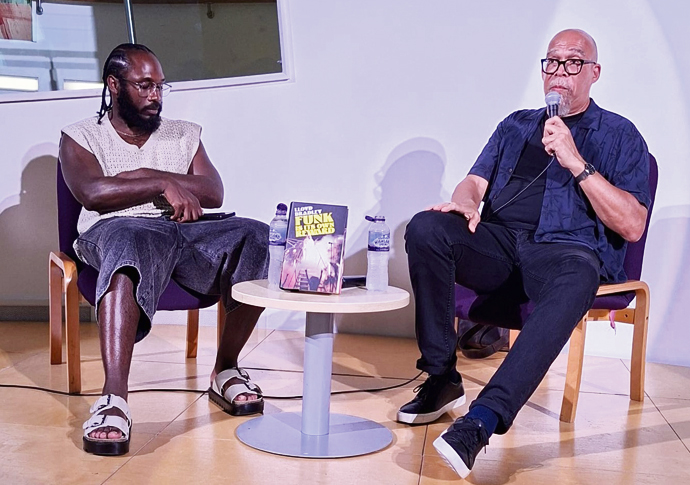
Lloyd Bradley delivering a talk on his new book
“Horace Andy was another example: I sat down with him in Studio One and I asked him what made Studio One so good. He answered, ‘Well, the singers and musicians’. So I pushed him, I asked, ‘Why did they go there?’ He replied: ‘Well, because they were the best… I said ‘but why did the best go there?’ And he clocked what I was getting at. What were the cultural reasons people went to [legendary producer] Coxsone Dodd’s Studio One? He thought about it and replied, ‘It was because Coxsone would let people smoke weed in the studio. That was an important reason behind Studio One’s success.
“And reggae came about because it was the people’s music.
“I saw how downtown people could not afford to get to uptown dances, which had orchestras playing, so Black musicians, producers and entrepreneurs created their own.
“It doesn’t have to be an anguished howl from the ghetto, it is about having a good time on a Saturday night. It doesn’t have to be made by someone who sat on a gully bank in Kingston. It was just about some people wanting some pop music. No one was denying times were hard, but at the same time there was just more to it than sufferation.”
Lloyd grew up in Crouch End and later Chalk Farm. He was a teenager in the late 1960s and early 1970s.
“Everyone was on Top of the Pops,” he recalls. “You’d have the Temptations followed by Led Zeppelin followed by Val Doonican. We grew up watching this spectrum of music. Pop music was just such a big part of life.”
Funk Has Its Own Rewards is, like his previous works, an expansive social history that identifies the ingredients that came together to create a sound with an influence that reverberated through the decades and remains potent today.
Its “magic” phase can be traced to various influences, he states, and then the maths element was the evolution of funk as a marketable genre, which was a commercial response to creativity that came out of the Black Arts movement of the 1960s.
“History belongs to those who write it down – and so much of this stuff wasn’t being written down,” adds Lloyd.
And that is what Lloyd’s brilliant books do – get the stories down.
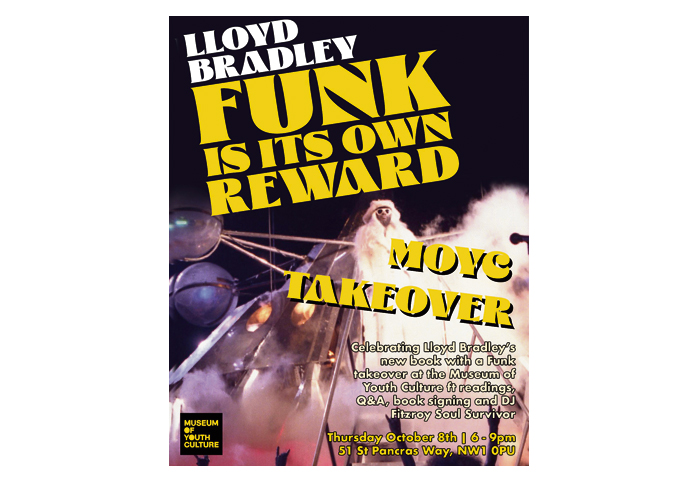
• Funk Is Its Own Reward, by Lloyd Bradley, is published by Constable
• Lloyd is marking the publication of Funk Is Its Own Reward at the Museum of Youth Culture on Thursday October 8th from 6pm onwards. 51, St Pancras Way, NW1 0PU
