Low-income young people ‘face barrier after barrier after barrier’
Aspiring vet has been unable to afford to begin university course
Friday, 18th September — By Amy Reid
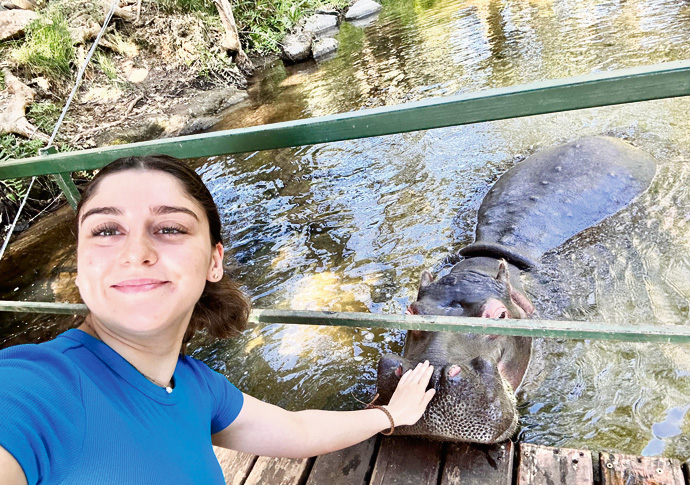
Petek Karaaslan, who was offered a place at the University of Bristol to study veterinary medicine in 2023 – but has been unable to afford to begin her course
AN aspiring Islington vet who cannot take up her place at veterinary school due to financial constraints says underprivileged young people face “barrier after barrier after barrier” trying to join the profession.
Petek Karaaslan, 26, was offered a place at the University of Bristol to study veterinary medicine in 2023, but has been unable to afford to begin her course.
Ms Karaaslan, who is also a carer for her disabled mother, is not eligible for a tuition fees loan because she has already completed an undergraduate degree in psychology and neuroscience from Goldsmiths – a decision she says she made at 18 with little knowledge of how it would impact her future options.
“I kind of had to navigate the entire school system by myself,” she told the Tribune. “I knew I wanted to go into something to do with healthcare but I wasn’t exactly sure and I didn’t have anyone helping me.
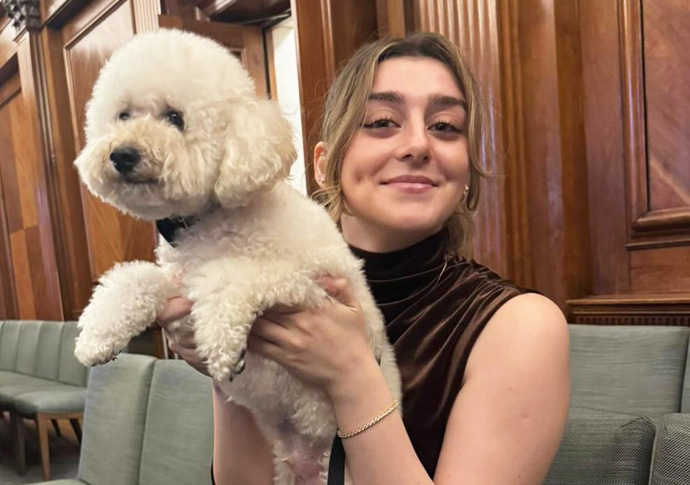
“Picking this degree at 17/18 seems to have led me down this path where I’m limited and I can’t really do what I want to do.”
The daughter of Turkish immigrants, Ms Karaaslan became the only English speaker in her household after her father passed away when she was 11. She struggled to achieve the A-levels she needed while a student at St Mary Magdalene in Highbury due to personal circumstances.
She retook her exams the following year after self-studying at home and went on to achieve a 2.1 at Goldsmiths. While at university, she began trying to secure clinical veterinary work experience.
Animals have always been an important part of her life, but she did not consider vet medicine as a career option until she was already doing her undergraduate degree. “I grew up watching David Attenborough animal documentaries with my dad. I have really, really fond memories,” she said. “Any time we’d find a stray in Turkey, we’d always pick it up, take it to the vet, get shots done, feed it. We always had a bag of kibble in the back of the car to just feed strays whenever we’d see them.”
She added: “Because of a lack of information, I didn’t know that veterinary medicine was such a vast subject. I thought, ‘they vaccinate cats and dogs, that’s it’. After researching, I was like, ‘oh, this is very, very interesting’.”
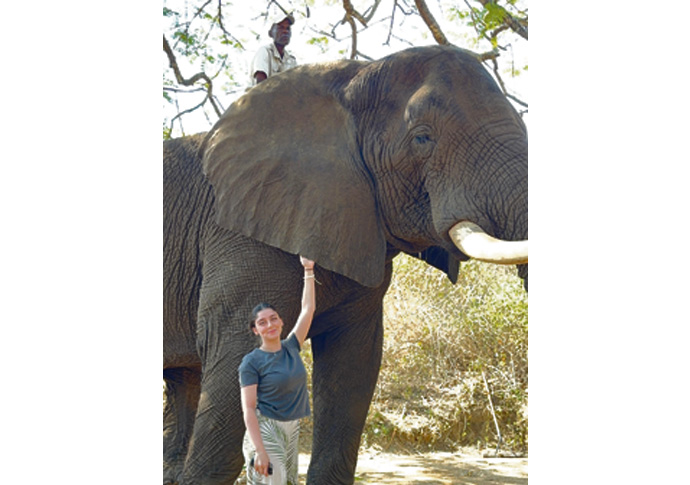
After struggling to get placements in the UK, she worked part-time to save up money for a placement at ProVet Animal Hospital in South Africa, where she banked 160 hours of clinical work with small and large African pets and wildlife animals. She also helped found a charity which saves dogs from euthanasia in Turkey.
Despite being offered a place at the Russell Group university, Ms Karaaslan only qualifies for a £6,000 maintenance loan. Dozens of attempts to get help from charities including the RSPCA, the British Veterinary Association and the Royal College of Veterinary Surgeons have yielded no returns.
“I don’t know what to do,” she told the Tribune. “I feel like I might just need to give up. I don’t want to give up, but I don’t have the help.
“There are a lot of funds available and a lot of help available to graduate medicine and graduate dentistry students, but not for graduate veterinary students, even though we don’t have any vets. There’s a national shortage.”
Demand for vets increased after a boom in pet ownership over the Covid pandemic, and Brexit rule changes caused a 68 per cent drop in the number of European vets coming to the UK.
Ms Karaaslan explained that equipment costs and unpaid work placements are another barrier that makes veterinary training inaccessible for low-income students.
“It really does seem like this degree is only for people who come from a wealthier background or international students,” she said. “I’m not sure what’s going on but the situation needs to be fixed.”
The Islington resident has had to ask to defer her studies again this year and is awaiting Bristol’s approval. “I hope I don’t lose my spot, because I’ve been trying to go since 2024,” she said. “My degree would have actually been over already if I could have just gone the first time round.
“I’ve just kind of been stuck. I’m not sure what to do. And it’s really upsetting because I worked really hard to get into the programme.
“It’s just really, really frustrating, because I see the life that I want for myself, I’ve gotten in, but I can’t go.”
Vet schools in the UK have a high proportion of international students, particularly North Americans who train in the UK for its cheaper tuition fees, Ms Karaaslan told the Tribune.
The University of Edinburgh’s most recent statistics show that just 48 per cent of its vet cohort came from the UK, 29 per cent came from the Americas, 20 per cent from Asia and Australasia, and the rest came from Europe, Africa and the Middle East.
“I just think there’s too many barriers with home students,” she said. “It can be hard to get a spot because of international students. But then, even if you do get a spot like me, it’s hard to go because of funding. It’s just barrier after barrier after barrier.
“If we do have a national shortage and we need more UK trained vets, we should look to give students opportunities and funding.”
