‘Moving’ abolition songs rediscovered
Anti-slavery music stored deep in the British Library has inspired a 2-year project involving study and performance, writes Daisy Clague
Friday, 2nd October — By Daisy Clague
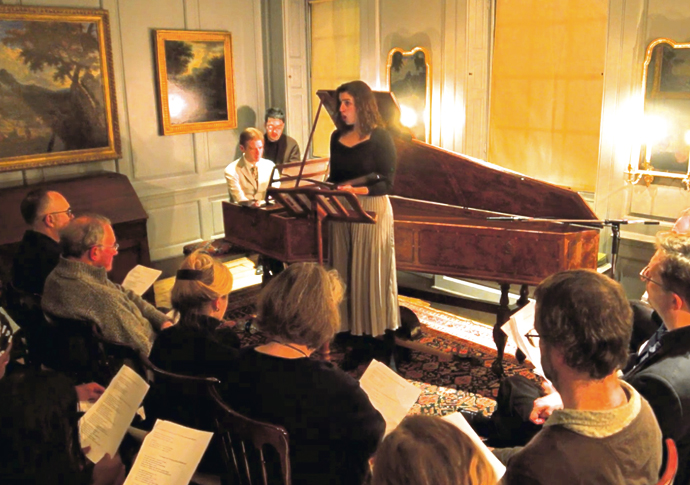
A concert at Handel Hendrix House, imitating the 18th-century environment in which the songs would have been performed
THE songs were rediscovered deep in the archives of the British Library, centuries after they were performed in the parlours and concert halls of anti-slavery campaigners and sympathisers.
Musicologist Berta Joncus was programming a concert back in 2018 when she stumbled across this “Abolition Song”, a corpus of music written and performed between 1787 and 1830.
“I was doing title searches – using keywords that I knew were used for enslaved people in the 18th century,” said Dr Joncus, who subsequently connected with an academic in the United States who was studying the same music.
“I was not only shocked, but also moved. This music was really putting people out there, [composers] were putting themselves at risk to write and perform it.
“At the time, to argue strongly against the slave trade and advocate publicly for abolition, it threatened you with total social ostracisation.
“It’s like Just Stop Oil – these were radical people risking their reputation, being taken to court, being pummelled in the press.”
Since recovering the music, Ms Joncus has set up the Abolition Song and its Legacies project, a two-year collaboration between both musicians and scholars run in partnership with the Guildhall School of Music & Drama.
While Abolition Song has largely disappeared from the history books, Ms Joncus and fellow researchers have found that it was part of wider efforts to use the arts to create a picture of what life was like on plantations and to rally support for outlawing the slave trade.
“All the anti-slavery songs we know of were written by white composers, who set the words of white poets to music,” Ms Joncus explained.
“There was a growing body of poetry by white authors that argued against slavery, which circulated in newspapers, and then white composers decided to set those words to music. That’s how it evolved.”
And while scholars do not yet know of any Black composers in the same genre, there was a contemporary circle of Black writers called the Sons of Africa who, Ms Joncus believes, influenced these white abolition poets and composers.
She also told how women were key in the production and circulation of Abolition Song.
Playing this music for modern audiences also has its own sensitivities, Ms Joncus explained, which is part of why the initial concerts were held for scholars rather than the public.
“The terms and descriptions used to refer to Africans include some that we find really offensive today. I wanted to be very careful about how they would land with those in the room,” she said.
The concerts alternate between the music itself and then “dramatic readings” of work by Black anti-slavery activists.
• Abolition Song and its Legacies will have a public concert at the Foundling Museum on October 16, 6.30pm-8.30pm. Tickets are available online.
