When Sam was in eye of storm over youth centre
Anselm ‘Sam’ Samuel’s memoir charts his eventful journey from ‘political hellraiser’ to becoming a serious political educator and youth worker, writes Angela Cobbinah
Friday, 2nd October — By Angela Cobbinah
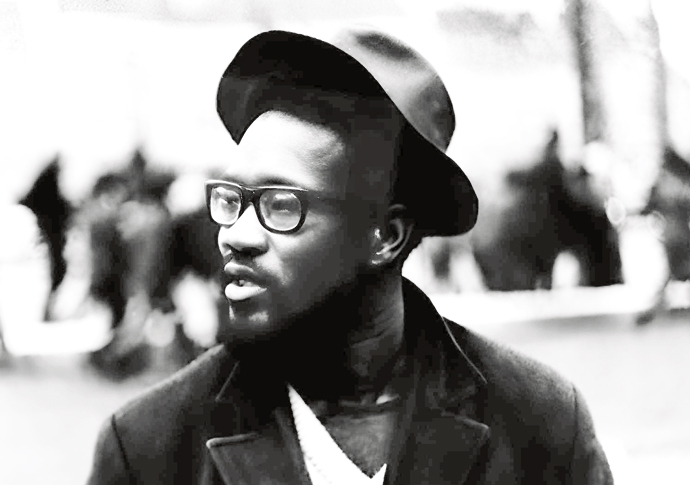
Anselm ‘Sam’ Samuel, who died in March at the age of 93, ‘was seen as an inspirational figure in the struggle and debate for a progressive youth service for black and white working-class youth in Britain’s cities’
FOUR decades on, few people remember the tug of war over the Clapton Youth Centre that became headline news before it was closed down for being too political just four years after it opened.
Occurring at a turbulent moment in history, when Black youngsters were taking to the streets in response to widespread discrimination, the impact of the closure was seismic. Although seen as a cynical one-off at the time, it turned out to be a prelude to the gradual decimation of the youth service, not just in Hackney, but the whole of London in the years to come.
The short but rocky history of the Clapton Youth Centre (CYC) is told by the man in the eye of the storm, Anselm “Sam” Samuel, as part of a memoir he wrote a year before his death in March at the age of 93.
Written originally as a series of notes for his family and developed into a book with the help of colleague and friend Jean Tate, My Life: Pan Man, Black Panther, Youth Worker charts Sam’s eventful journey from his birthplace of Trinidad, where he was part of the burgeoning steel band movement, to 1950s London and his reincarnation as a “a political hellraiser” turned “serious political educator and youth worker”.
The book is a vivid recollection of life for a young man from the Caribbean amid the gloom of post-war Britain, a fascinating account of the mobilisation against institutional bigotry and panoply of interlinked characters involved, and a timely reminder of the length and breadth of the youth service in the days before Mrs Thatcher began its demolition. Alongside a number of independently run youth clubs, CYC was one of nine state-funded youth centres operating in Hackney alone and was part of a national push for changes in policy and practice that would enrich youngsters’ lives rather than just keep them off the streets.
“The book explains why Sam was seen as an inspirational figure in the struggle and debate for a progressive youth service for black and white working class youth in Britain’s cities,” says Jean, his immediate boss at CYC. “Although on paper, the authorities were committed to equal opportunities and anti-racism, they didn’t want to rock the boat either. Sam often ruffled feathers with his forthright views but he was always absolutely there in support of the youth, and for him that was the bottom line.”
Brought up on the wrong side of the tracks in Port of Spain at a time of anti-colonial turmoil, Sam already had a good understanding of the machinations of race and class when he arrived in Britain aged 25 after being unable to get a proper job. It was 1958 and the aftermath of Notting Hill race riots, and its fallout would see him join a growing band of grassroots political activists.
He became a youth worker in the early 1970s after serving a six-month jail sentence for GBH following an incident at Oxford Circus tube station when he was manhandled by police on his way back from a demo. He saw his job with Islington Committee for Community Relations as a way of helping youngsters similarly up against it at the hands of the powers that be.
In 1979 Sam joined the CYC, a new youth centre headed by Jean, whom he already knew from the pressure group Teachers Against Racism. Officially declaring the CYC to be “the first anti-racist youth centre”, the two wanted youngsters to be part of the management and for the centre to be part of the community. This saw CYC becoming involved in a number of local campaigns, including the protests surrounding Colin Roach, a young man whose death in Stoke Newington police station remains a mystery to this day.
Although similar developments were taking place in other youth centres in London, likewise spearheaded by political activists turned youth leaders, the authorities’ reaction to events at CYC went from barely concealed alarm to open hostility, particularly following Sam and Jean’s decision to take a group of teenagers on a trip to Grenada, where an armed revolution had just seen a change of government.
When Sam had another brush with the law, an assault conviction that he successfully appealed, the story appeared in the Daily Mail, Evening Standard and the Sun, with the latter sneering that “Fighting Anselm” was the best person “to teach kids about violence”.
He managed to hang on to his job but the writing was on the wall for CYC. Despite its success in engaging hitherto disaffected youngsters and a vigorous community defence campaign supported by Hackney MP Ernie Roberts, it was closed for good in 1982, with Sam and Jean suspended on all manner of disciplinary charges.
While Sam was eventually reinstated in his capacity as a Hackney borough youth worker, after four years of wrangling Jean was forced to take her case to the High Court. She won and in 1987 she was appointed head of equal opportunities under Hackney’s new youth chief, Winston Pinder. The book ends as it begins with Carnival as Sam describes his return to his pan roots, regularly taking part in Notting Hill Carnival with Pantonic, a steel band that twice achieved second place in the Panorama contest. He also travelled to other carnivals in the UK and Europe.
It was fitting that his final send-off took place to the sound of steel pan music and fireworks outside his Crouch End home of 50 years before ending with a service at Islington Crematorium in April. More than 200 people turned up in tribute to the man who in the toughest of times would always say, “De band still passing.”
• My Life: Pan Man, Black Panther, Youth Worker by Anselm Samuel, is published by Eli Shabazz Publications at £16.99
