‘I feel that as a community, this is a piece of work we have to do’
Emirates ‘Bloodmobile’ seeks black heritage donors to fight sickle cell disease
Friday, 23rd October — By Amy Reid
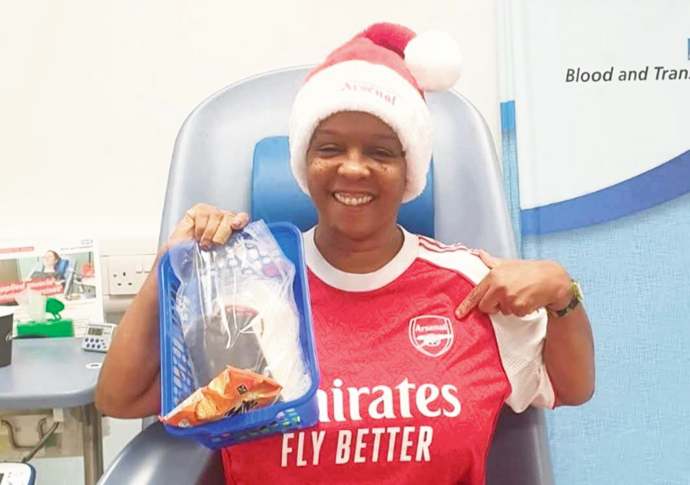
Brenda Smith has given blood 56 times in 3 decades
A ‘BLOODMOBILE’ has arrived at the Emirates. No, it has nothing to do with Halloween, but everything to do with boosting stores of blood donations from black heritage donors to help fight sickle cell disease.
The Mobile Blood Donor Centre parked up outside the home of the Arsenal yesterday (Thursday) and will visit several other spots across the capital over the next 12 months to reach more donors with the blood type that best matches people suffering from sickle cell, called “Ro”.
This type of blood is 10 times more common in people of black heritage than in white people. Current stores can only provide half the quantity of Ro blood needed to treat people with sickle cell. The NHS Blood and Transplant division needs 16,000 additional regular black heritage donors to make up the difference.
The disease, which is the fastest-growing inherited blood disorder in the country, affects 19,000 people, with around 10,000 of them living in London.
Brenda Smith has given blood 56 times in three decades, and urges others to become regular donors. She donated for the first time on her way home from work when a mobile donation centre caught her attention as she tried to avoid the rush hour at London Bridge.
“I found it quite easy. I wasn’t afraid of needles and back then, they gave you Guinness at the end,” she told the Tribune.
Since then, she has become an advocate and campaigner for giving blood, volunteering with the Sickle Cell Society to encourage people of black heritage to become blood donors, and inspiring others in her network to become donors.
Ms Smith, who coaches at Islington Cycling Club and is a qualified Islington tour guide, is also part of a running group which now has a blood donors sub-group called the Blood Squad.
She believes no one is too busy to donate, and told of how one young woman she recently saw giving blood in Brixton managed the whole appointment while conducting a lengthy argument on the phone.
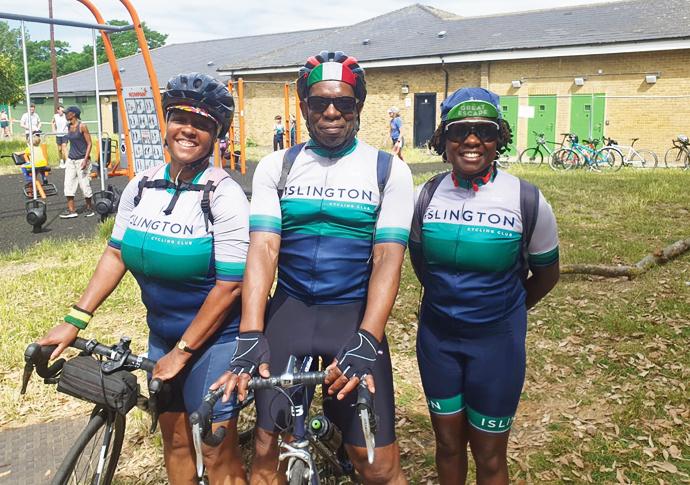
Ms Smith, who coaches at Islington Cycling Club and is a qualified Islington tour guide, is also part of a running group which now has a blood donors sub-group called the ‘Blood Squad’
“She had her phone in one hand – I don’t know if they were quarrelling or what they were doing, but she was texting – and she was giving blood with the other. When I saw her crossing the zebra crossing just outside, I kid you not, she was still on the phone.
“She was texting with one hand, saving lives with another. She was blasé as ever but she kept her appointment!”
Ms Smith’s hope is that giving blood will become normalised among the black community and beyond to make it easier for doctors to find good blood matches for those in need.
“We need more black people and people of mixed heritage to come forward and give blood so we can find all those people with Ro,” she said.
Ros, Ms Smith said, are “treated like royalty” because of how important their blood is for sufferers of sickle cell, who need transfusions regularly, often several times per month.
She explained that expanding the pool of regular donors as much as possible is vital to the effective treatment of diseases like sickle cell, as there are countless reasons why would-be donors may be unable to give blood.
Chronic conditions such as anemia, acute illness such as the flu and recent overseas travel can all prevent someone donating. Men can donate around four times a year, whereas women can only donate around three times.
“If we need five people to give blood, then we need 20 to come forward,” she said. “Put yourself or somebody you love in the place of somebody with sickle cell. “Doctors are frantically looking for the right blood because there’s a lack of suitable blood. One of my bloods went out to Birmingham – don’t tell me black people are not in Birmingham.
“I would say to people, wouldn’t you want to be a lifesaver?
“And it’s not just the person you’re helping, you’re also helping all the people who worry about them: brother, sister, all of that.
“I feel that as a community, this is a piece of work we have to do. It’s only us that have the Ro.”
Mayor of Islington Councillor Rosaline Ogunro said: “I’m delighted to welcome this new mobile blood donor centre to Islington. Bringing blood donation closer to where people live and work makes it easier for residents to make a lifesaving contribution and help ensure patients receive the blood they need.
“I particularly want to thank members of our black heritage communities whose donations play a vital role in supporting people living with sickle cell disorder and others who rely on regular blood transfusions.
“I hope this new service inspires even more residents to become donors and help save lives.”
